
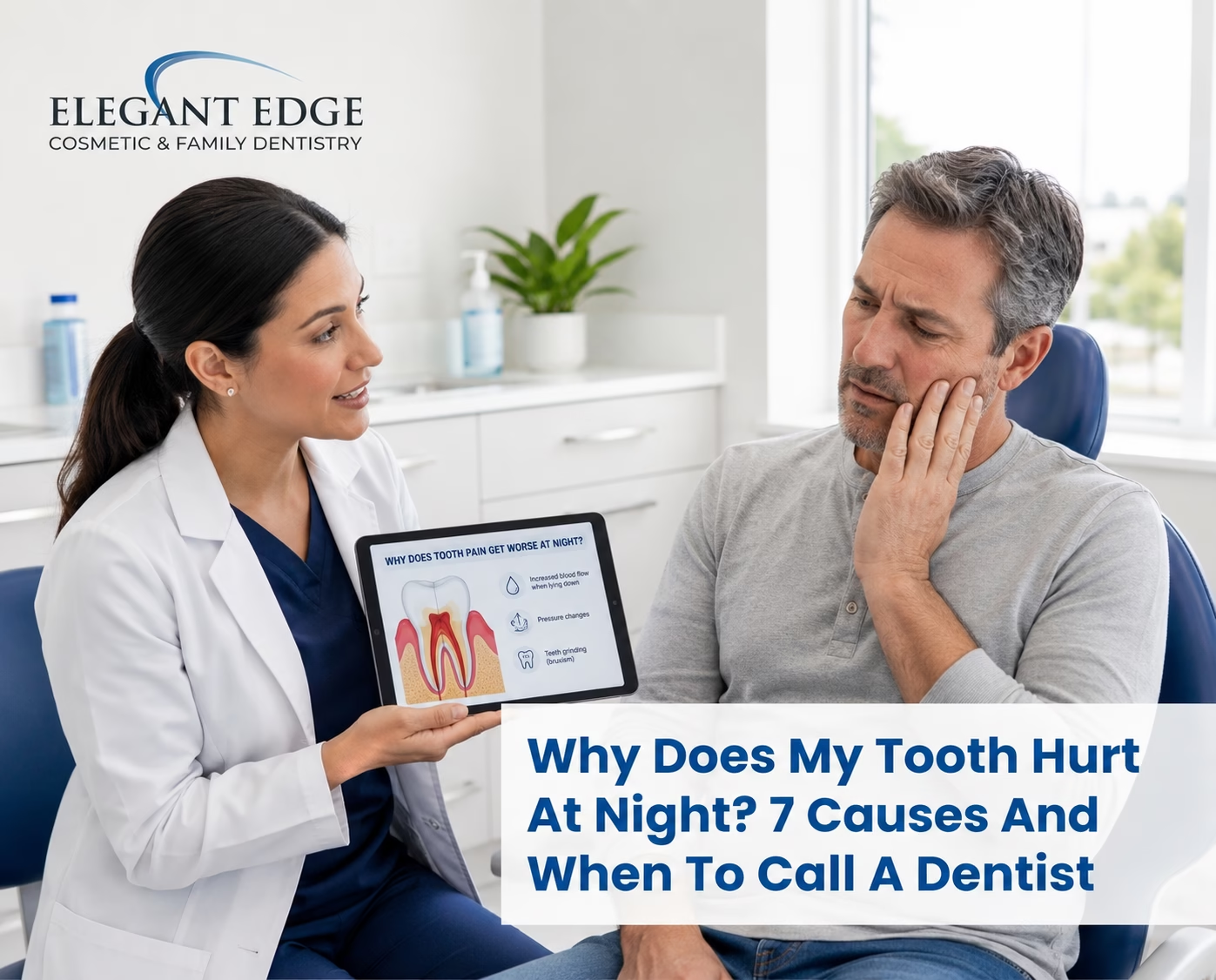
It is 2 a.m., the house is quiet, and the one thing you cannot ignore is a tooth that will not stop aching. If you have ever wondered why your tooth hurts at night when it felt manageable all day, you are not imagining it. Nighttime really does change how tooth pain feels, and the reasons range from a simple pressure shift to an infection that needs attention soon. Below are the seven most common causes and clear guidance on when to call us tonight versus book for the next day.
Key Takeaways
- A horizontal sleeping position increases blood flow and pressure inside an inflamed tooth, which is why pain often spikes at bedtime.
- Seven frequent culprits are deep decay, an inflamed nerve (pulpitis), nighttime grinding, a dental abscess, sinus pressure, gum disease with exposed roots, and an undetected cracked tooth.
- Swelling, fever, a foul taste, facial trauma, or pain you cannot control are red flags that call for same-day or emergency care.
- Overnight relief measures like elevating your head, a cold compress, and over-the-counter pain relievers ease symptoms but do not treat the cause.
- A dentist uses an exam, digital imaging, and simple tests to pinpoint the source, then treats it with anything from a filling to root canal therapy.
The Short Answer: Lying Down Raises the Pressure
When you stand or sit through the day, gravity helps drain blood away from your head. Lie down, and that balance flips. More blood pools around your face and jaw, and any tooth with an irritated or inflamed nerve feels that extra pressure as a throb.
The tooth was likely bothering you earlier too, but daytime noise, work, and movement gave your brain other things to focus on. Strip those away at night, and the signal gets your full attention. That pressure mechanism is real, yet it is only the trigger. Something underneath is usually driving the pain, and that is what the seven causes below explain.
Cause 1: A Cavity That’s Reached the Nerve
A small cavity rarely wakes you up. Once decay works through the outer enamel and into the softer dentin, it moves closer to the pulp, where the nerve lives. At that depth, temperature and pressure reach the nerve easily, and a dull ache can turn into a sharp jolt.
Saliva flow also drops while you sleep, so the acids and bacteria that feed decay sit on the tooth longer overnight with less natural rinsing. If a lingering ache is tied to one specific tooth, a deep cavity that needs dental fillings or more is a likely starting point.
Cause 2: Pulpitis – An Inflamed Tooth Nerve
Pulpitis is inflammation of the pulp, the bundle of nerves and blood vessels inside your tooth. It comes in two forms. Reversible pulpitis is milder, often flares with hot or cold, and can settle once the irritant is treated. Irreversible pulpitis brings spontaneous, throbbing pain that lingers and tends to worsen when you lie flat, exactly the pattern that keeps people up at night.
According to the Mayo Clinic, a toothache from an inflamed or infected pulp usually needs professional care rather than home remedies. Irreversible pulpitis often leads to root canal therapy to save the tooth.
Cause 3: Nighttime Grinding and Clenching (Bruxism)
Plenty of people grind or clench in their sleep without knowing it. Hours of that force load your teeth and jaw muscles, leaving you with sore teeth, tight jaw muscles, or a headache by morning.
If your pain shows up as a general aching across several teeth rather than one hot spot, and your jaw feels tired when you wake, grinding is worth ruling out. A custom nightguard cushions the teeth, and if your jaw joint is involved, a TMJ treatment evaluation can address the muscle and joint strain behind the pain.
Cause 4: A Dental Abscess or Infection
An abscess is a pocket of infection at the root of a tooth or in the surrounding gum. The pressure it creates does not ease when you relax, and lying down can make the throbbing feel worse.
This is the cause you least want to ignore. Watch for warning signs: swelling in the face or jaw, a fever, a bad taste from draining pus, or pain that radiates toward your ear or neck. An infection can spread, so these symptoms move you from wait-and-see to get-seen-quickly.
Cause 5: Sinus Pressure Masquerading as Tooth Pain
Not every nighttime toothache starts in a tooth. The roots of your upper back teeth sit close to your sinus cavities and share nerve pathways, so a sinus infection or heavy congestion can feel exactly like a toothache. Lying flat lets congestion build, which is why the pressure often peaks at night.
A few clues point to sinuses: the ache spans several upper teeth rather than one, it comes with a stuffy nose or facial pressure, and it flares when you bend forward. If a cold or allergies showed up around the same time as the pain, your sinuses may be the real source.
Cause 6: Gum Disease and Exposed Roots
When gums recede from periodontal disease, the root surfaces they once covered become exposed. Roots lack the protective enamel of the crown, so they react to temperature and pressure, and inflamed gum tissue tends to ache more when you are still and relaxed at night.
Bleeding when you brush, tenderness along the gumline, and sensitivity that seems to come from the base of the tooth all point toward the gums. Professional gum disease treatment can calm the inflammation and slow further recession before it exposes more root.
Cause 7: A Cracked Tooth You Haven’t Noticed Yet
A hairline crack can hide for months. It flexes open under the clenching and temperature swings that happen while you sleep, producing a pain that comes and goes and is hard to trace to one tooth.
Classic signs are a sharp zing when you bite down or release, and sensitivity that appears out of nowhere. Because cracks widen over time and can let bacteria reach the nerve, they are worth evaluating early. A protective dental crown often stabilizes a cracked tooth before the damage deepens.
Safe Ways to Get Through the Night
These steps ease symptoms so you can rest. They are temporary relief, not a fix, so plan to be seen once the pain points to a real problem.
- Prop your head up with an extra pillow so it sits above your heart and less blood pools around the tooth.
- Take an over-the-counter pain reliever exactly as directed on the label; an anti-inflammatory can help with swelling-related pain.
- Hold a cold compress against your cheek for 15 minutes at a time to numb the area and reduce swelling.
- Rinse gently with warm salt water to soothe irritated gum tissue and loosen any debris around the tooth.
- Skip very hot, cold, acidic, or hard foods before bed, since they can set off a sensitive nerve.
When to Call a Dentist – Tonight vs. Tomorrow
Not every toothache is an emergency, but some signals mean you should not wait. Use this quick guide to decide.
| Call the emergency line tonight | Book an appointment for the next day |
|---|---|
| Facial or jaw swelling | A dull ache that returns at night |
| Fever with tooth pain | Sensitivity to hot, cold, or sweets |
| Recent trauma, a knocked-out or broken tooth | Pain when biting on one tooth |
| Pain you cannot control with OTC medicine | A tooth that feels off but is not swollen |
| A foul taste from draining pus | Mild gum tenderness or bleeding |
Our team keeps evening hours during the week, including Tuesday until 8 p.m., so next-day care in Rochester Hills is easier to fit around work and school.
What Your Dentist Will Do to Find the Cause
Finding the source is usually quick. We start with a focused exam and your history: when the pain started, what makes it better or worse, and which tooth you suspect. From there, digital X-rays show decay, infection, and bone changes that are invisible to the eye, while simple bite and vitality tests reveal whether a nerve is inflamed or dying.
Treatment depends on what we find, from a filling for a cavity to root canal therapy for an infected nerve, or a cleaning and periodontal care when the gums are the problem. If dental anxiety is part of what has kept you from coming in, sedation dentistry options can make the visit calm and comfortable. Staying on top of routine teeth cleaning also catches small problems before they turn into 2 a.m. emergencies.
You do not have to wait out the pain. Dr. Gregory Mansour and our team offer gentle, judgment-free care with convenient evening appointments. Contact us to schedule your visit or book an appointment – Call (248) 852-3130
Frequently Asked Questions
Can a nighttime toothache go away on its own?
Sometimes the pain eases, but that does not always mean the problem is gone. A fading ache can signal a dying nerve rather than healing. Decay, cracks, and infections do not repair themselves, so a toothache that keeps returning at night should be evaluated even if it quiets down between episodes.
Why does my tooth only throb when I lie on one side?
Lying on the side of the sore tooth can raise local blood pressure and warmth around it, which intensifies the throb. Sinus congestion settling on one side can do the same for upper teeth. If one position reliably triggers pain, note it, since that detail helps your dentist narrow down the cause.
What can I safely take for tooth pain while pregnant?
Many providers consider acetaminophen the preferred option during pregnancy, while some pain relievers are limited in later trimesters. Always confirm with your physician or dentist before taking anything. Tell us you are pregnant when you book so we can plan safe, comfortable care and any imaging with appropriate precautions.
