
Cleaning vs. Checkup: What Each Part of Your Visit Does
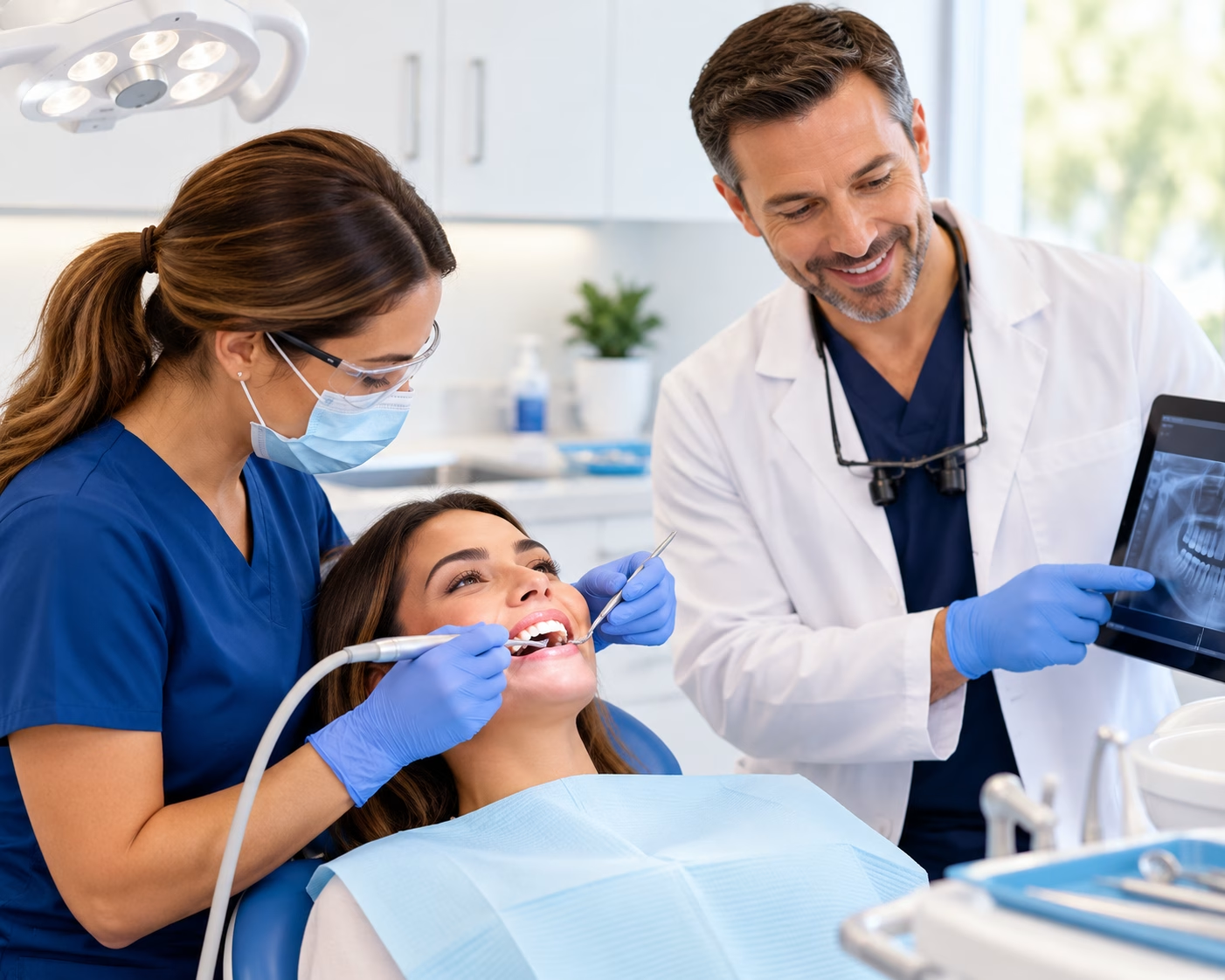
The cleaning is about removal; the checkup is about detection. Your hygienist handles the first part, lifting off soft plaque and hardened deposits and then polishing each tooth. Your dentist handles the second, looking over your teeth, gums, bite, and the inside of your mouth to decide whether anything needs treatment or monitoring. Because routine appointments almost always include both, people tend to say “cleaning” and “checkup” as if they mean the same thing.
Why Brushing Alone Isn't Enough
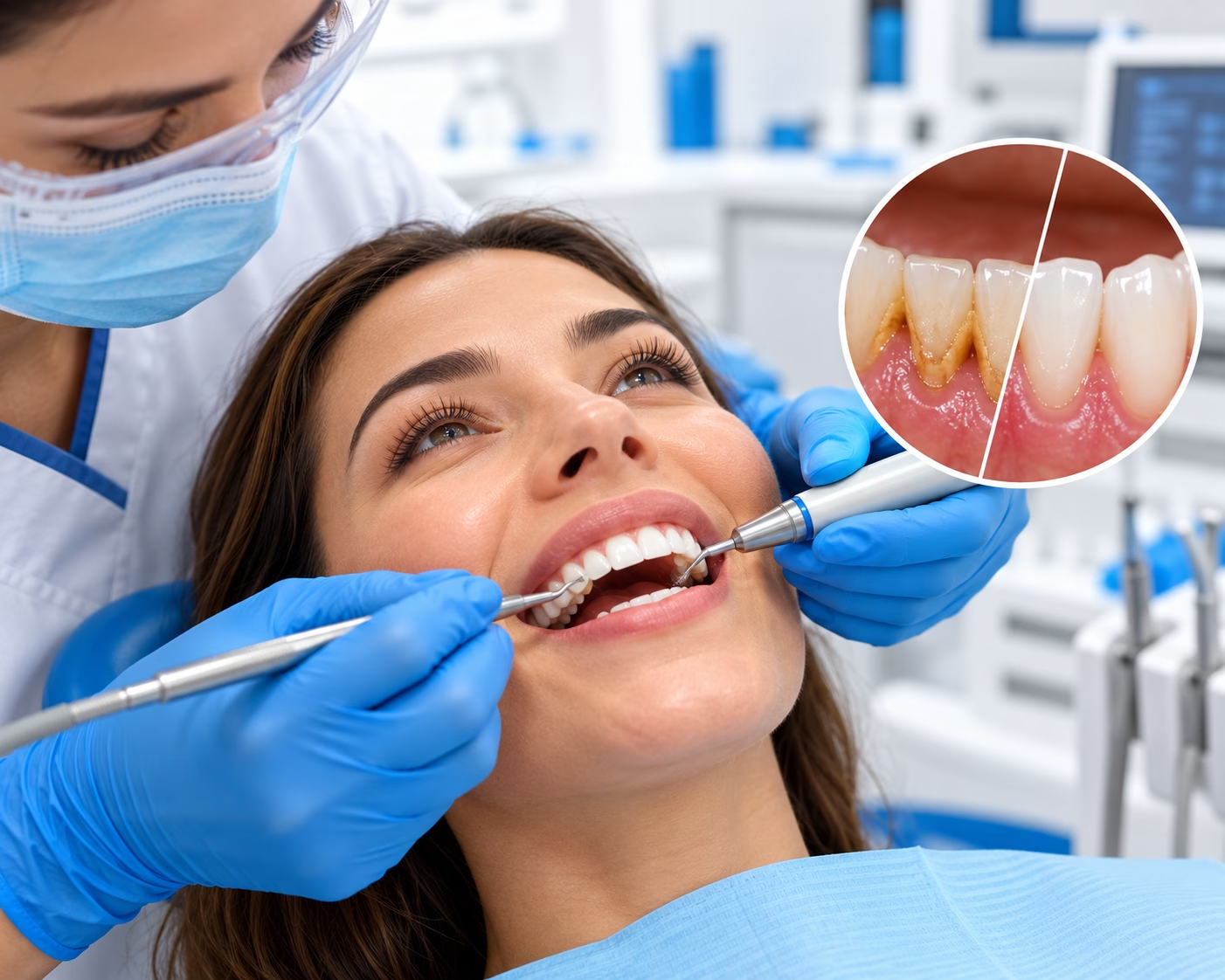
Even people with excellent habits leave a little plaque behind in tight corners and just under the gums. Within days, that film starts to harden into tartar, which bonds to enamel so tightly that no toothbrush or floss will budge it. Getting it off takes professional instruments.
Routine visits pay off in other ways, too:
- Smaller fixes: a cavity found early is usually a quick filling instead of a crown or root canal later.
- Gum problems caught before they hurt: early gum disease rarely causes pain, and the NIDCR points out that its first signs, like slight bleeding, are easy to brush off.
- A second set of eyes: we notice worn enamel, cracked fillings, and soft tissue changes you’d never see in a bathroom mirror.
Inside Your Teeth Cleaning & Checkup Appointment
Every visit follows the same basic rhythm:
Catching Up
We review any health changes, new medications, or concerns since your last visit.
A Look at Gums and Teeth
Your hygienist checks gum health and notes anything that looks different.
Scaling
Ultrasonic and hand tools clear plaque and tartar along and slightly below the gumline.
Polishing
A mildly gritty paste leaves teeth smooth and removes light surface stains.
Dentist Exam
Dr. Mansour or Dr. Tangalos checks teeth, gums, bite, and soft tissues and completes your screening.
X-Rays When They’re Useful
Digital X-rays are taken according to your history and risk, not an automatic calendar.
Wrap-Up
We explain what we found, answer your questions, and suggest when to come back.
What Your Dentist Looks For During the Checkup
Your dentist checks for decay, looks at the condition of your gums and existing fillings or crowns, evaluates how your teeth come together, and examines your tongue, cheeks, and throat. Every adult checkup includes an oral cancer screening. We’ll also ask how your home routine is going and suggest small changes if they’d help.
How Much Time Should You Set Aside?
A routine visit usually runs 45 minutes to an hour. Your first appointment with us will take longer since we’re collecting records and doing a more detailed exam.
Is a Professional Cleaning Uncomfortable?
For most people, it isn’t. You’ll notice scraping, vibration, and some pressure. Tender spots are more likely when gums are inflamed, or there’s a lot of buildup to remove. Just raise a hand, and we’ll pause, switch instruments, or numb the area. Several of our hygienists are certified to provide local anesthetic.
How Often Do You Need a Dental Cleaning?
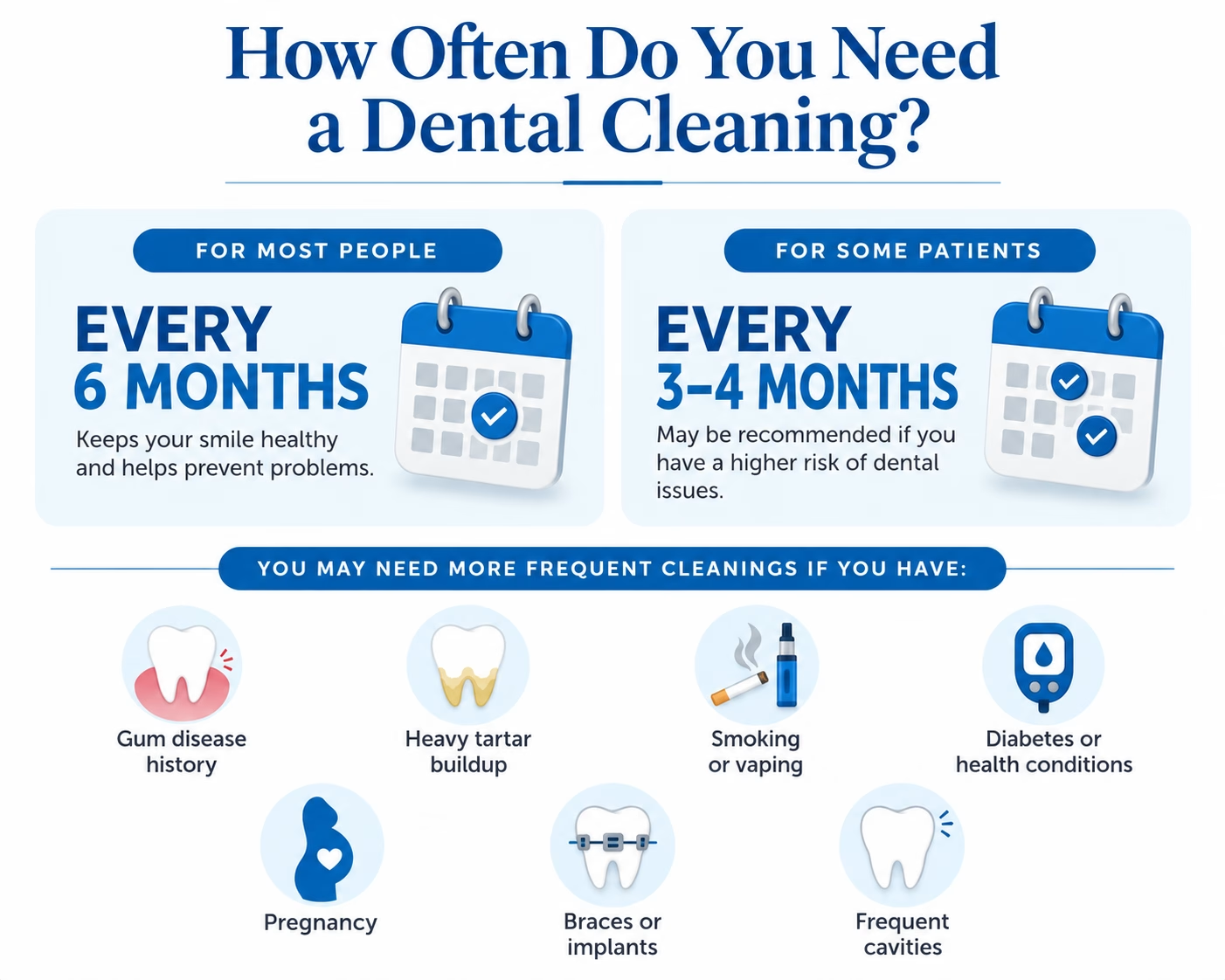
Two visits a year works for many patients, but it isn’t a universal rule. The ADA’s MouthHealthy site makes the point that visit frequency should be personal, and some people need to come in more than twice a year. We set your schedule based on your cavity history, gum health, and medical background.
You might need visits every three or four months if you:
- Have been treated for gum disease or build up tartar quickly
- Smoke, vape, or chew tobacco
- Live with diabetes or another condition that affects the gums
- Tend to get new cavities
- Are expecting a baby
- Have braces or dental implants that need extra care
Routine Cleaning or Deep Cleaning?
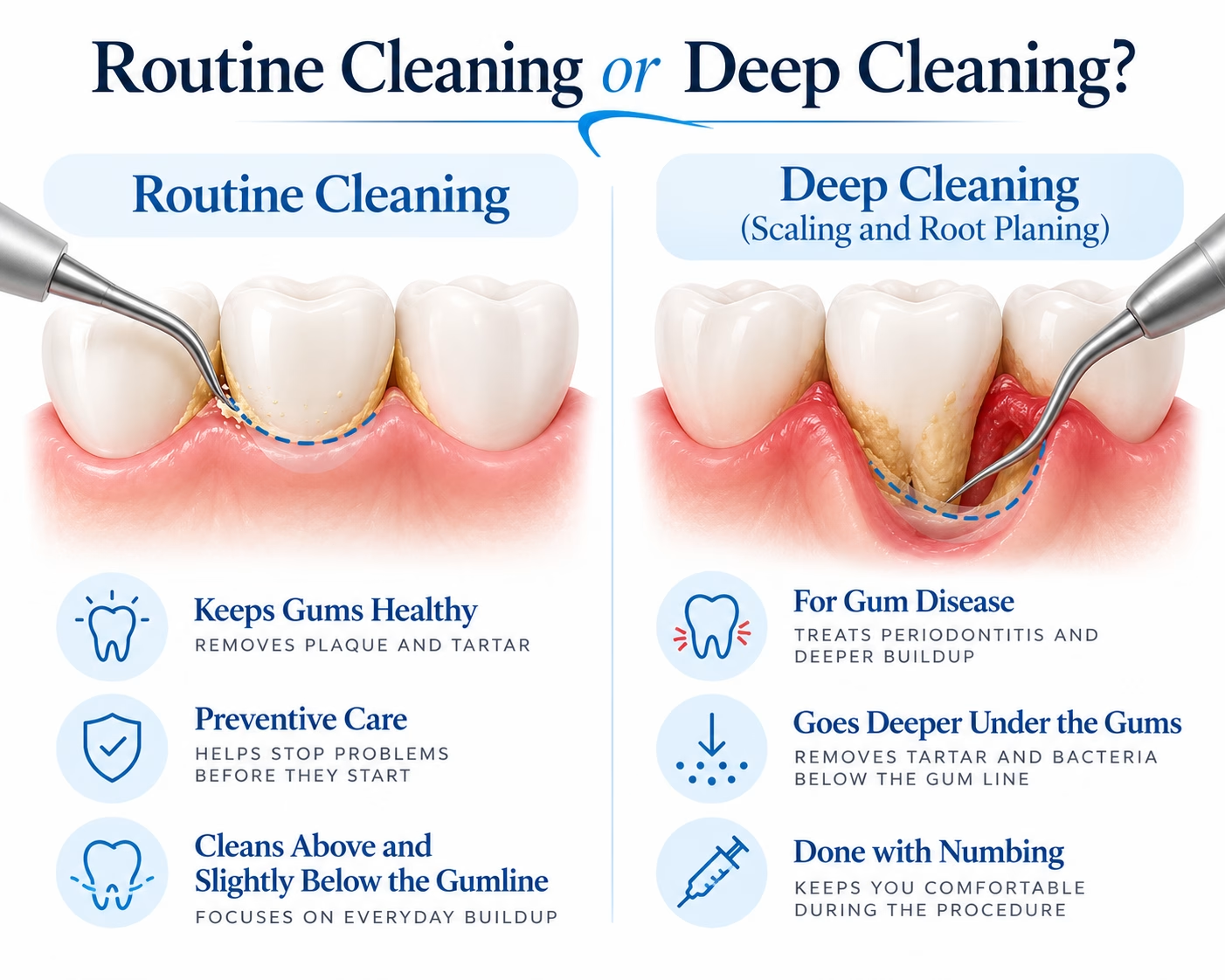
A routine cleaning is preventive care for healthy gums, clearing deposits above and just beneath the gumline. A deep cleaning, known as scaling and root planing, goes further under the gums to treat periodontitis and is done with numbing. If your exam shows signs of gum disease, we’ll talk through next steps, and our gum disease treatment page explains the process in detail.
What Bleeding During a Cleaning Means
A little bleeding during your cleaning usually means the gums are irritated, often from gingivitis. With better brushing and daily flossing, it commonly settles within a couple of weeks. If we see bleeding from visit to visit, we’ll take a closer look for gum disease.
Preventive Care Through Every Stage of Life
We’re a family practice, so we care for patients from toddlerhood through retirement. Here’s how cleanings adapt as you grow.
Kids’ Cleanings and Their First Dental Visits
Starting early helps children see the dentist as a normal, friendly part of life. We keep appointments short and upbeat, show kids our tools before we use them, and praise every brave moment. Read more about our pediatric dentistry and how dental sealants help shield back teeth from decay.
Dental Cleanings While You’re Pregnant
Keeping up with cleanings during pregnancy is safe and recommended. MouthHealthy’s guidance for expectant mothers notes that dental, obstetric, and pediatric organizations all support dental visits while you’re expecting. Pregnancy hormones can make gums swell and bleed more easily, so an extra cleaning in the middle months can be helpful.
Cleanings When You Have Diabetes or Other Health Conditions
Several health conditions change how your gums react to bacteria, and diabetes is one of the biggest. Diabetes and gum disease tend to feed each other, and CDC data show that gum treatment is linked with better blood sugar levels in people living with diabetes. Please keep us updated on your conditions and medications.
Care for Seniors and Denture Wearers
Regular exams remain important even with few or no natural teeth. We check the fit of your dentures, look for sore spots or irritation, examine your gums and tongue, and complete an oral cancer screening. Many older adults also deal with dry mouth from medications, and we can suggest ways to stay comfortable.

What to Expect When You're New to Our Office
Your first appointment is really a getting-to-know-you visit. It typically includes:
- Paperwork made easy: complete our patient forms at home to shorten check-in.
- A conversation: tell us what’s brought you in, what you’d like to change, and any worries about dental visits.
- A thorough exam: teeth, gums, bite, and any existing dental work.
- Current X-rays if needed: so our records match what’s happening today.
- Baseline gum readings: so we can track changes over time.
- Oral cancer screening: included with every comprehensive exam.
- Clear costs up front: if treatment is recommended, you’ll see the estimate before anything is scheduled.
Whether it’s been a year or ten since your last appointment, there’s no judgment here. Our first visit guide walks you through the day.

Paying for Cleanings: Insurance and Options
Preventive visits are one of the most commonly covered benefits in dental plans, though exact coverage depends on your policy. Here’s how we can help:
- In-network plans: Delta Dental (Premier and PPO) and Aetna Extend
- Other plans: We work with Cigna PPO and accept most commercial plans out of network
- Local employer benefits: Many patients carry Delta Dental through Chrysler, General Motors, Pontiac School District, or Corewell Health
- Financing: CareCredit is available for care beyond your routine visits
Our front office can verify your benefits ahead of time, so you’ll know what to expect before you arrive.
The Hygienists and Dentists Behind Your Care
Three licensed hygienists share our cleaning schedule, each bringing a different background to the chair:
Courtney
A Baker College graduate who has worked alongside Dr. Mansour since 2010 and is certified in nitrous oxide and local anesthetic. Read Courtney’s story.
Leah, RDH
Earned a Bachelor of Science in Dental Hygiene at the University of Detroit Mercy and holds certifications in Biolase laser therapy and local anesthesia.
Claudia
A dental hygiene graduate of Oakland Community College with nitrous oxide, Biolase, and local anesthetic certifications. She’s fluent in English and Polish.
Your exam is completed by Dr. Gregory Mansour, who has looked after Rochester Hills smiles since 1992, or by Dr. James Tangalos, whose hospital training included caring for patients with special needs.

Why Local Families Make Elegant Edge Their Dental Home
- Before-work and after-school times: Thursday appointments begin at 7:30 AM, and we stay open until 8 PM Tuesday and 7 PM Wednesday and Thursday. Check our complete office hours.
- Simple to get to: our office sits where Auburn Rd. meets Alexander St., a quick drive from Rochester, Troy, Auburn Hills, and Sterling Heights.
- Everyone under one roof: children, teens, parents, and grandparents can all be seen in the same place.
- Insurance handled for you: we verify benefits, explain what’s covered, and submit claims.
- Kindness first: six months or six years since your last cleaning, we’re just happy you came.
Overdue or just due? Either way, there’s a chair waiting for you.
Frequently Asked Questions
Do I Need X-Rays at Every Cleaning?
No. We take X-rays only when they’ll give us useful information, based on your age, cavity risk, gum health, and how long it’s been since your last set. Many patients go a year or more between routine X-rays.
Will a Cleaning Make My Teeth Whiter?
A cleaning removes surface stains from coffee, tea, and food, so your teeth often look brighter afterward. It won’t change the natural shade of your enamel, though. For that, professional whitening is the better option.
Can I Eat Right After My Cleaning?
Yes, in most cases. If you had a fluoride treatment, we’ll ask you to wait about 30 minutes before eating or drinking so it has time to work. If an area was numbed, wait until the feeling returns.
What Happens If My Hygienist Spots a Cavity?
Your dentist will confirm it during the exam, show you what we see, and explain your options. Small cavities can often be treated at a separate short visit, and we’ll share the cost before scheduling.
Can I Get a Cleaning If I Wear Braces or Clear Aligners?
Yes. Cleanings are especially important with braces, since brackets trap plaque. If you use clear aligners, bring them with you so we can check their fit and show you how to keep them clean.
How Do I Move My Records From My Previous Dentist?
Just let our front desk know when you book. With your permission, we’ll request your X-rays and records from your former office so we don’t have to repeat anything unnecessarily.