
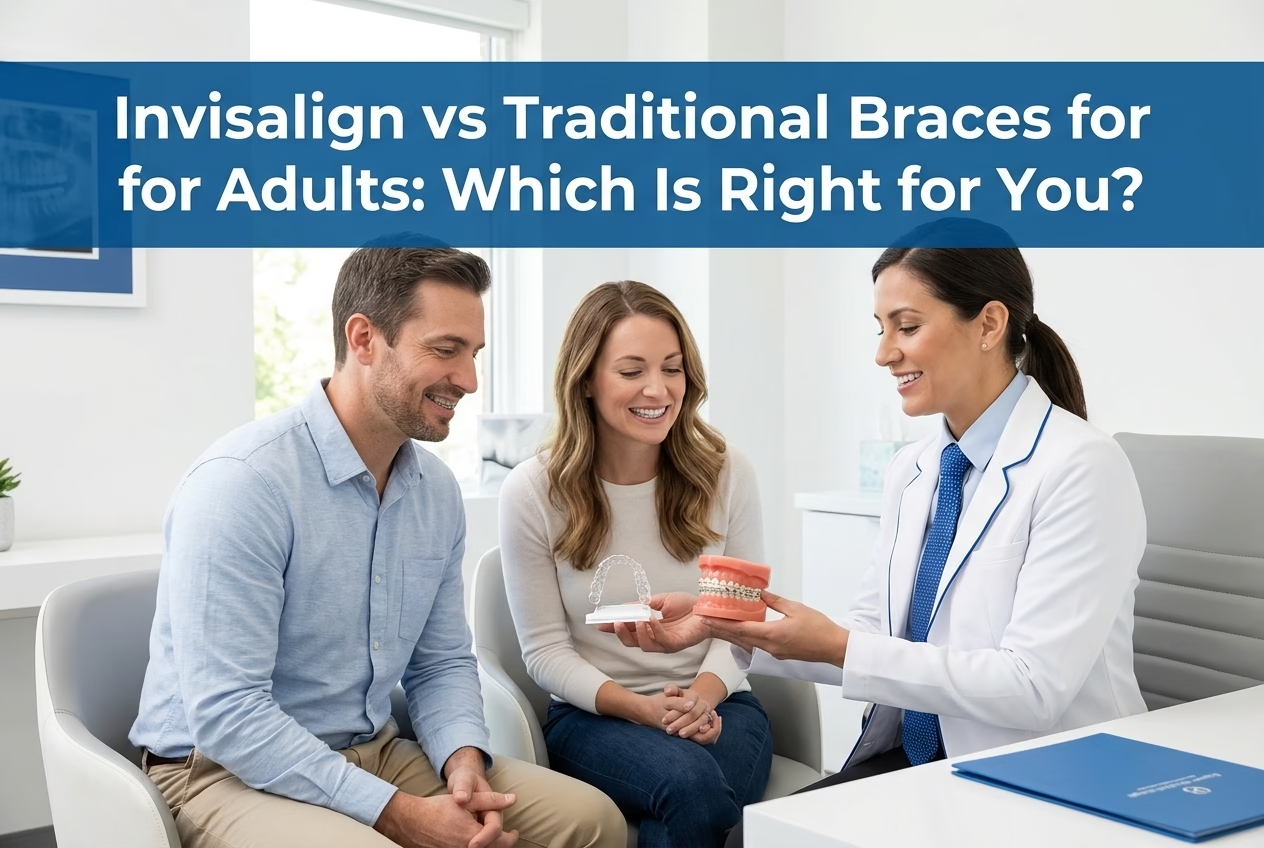
For most adults in Rochester Hills, weighing **Invisalign vs. Braces for Adults**, Invisalign wins on looks and convenience for mild to moderate cases. In contrast, traditional braces handle complex bite and rotation problems better. Cost is similar, and insurance often treats them the same. The right choice depends on your teeth, your habits, and your goals.
Key Takeaways
- Invisalign is nearly invisible and removable, which suits adults in client-facing roles.
- Braces handle severe cases like deep bites and big rotations more predictably.
- Cost ranges overlap, and most insurance plans cover both at the same rate.
- Success depends on you. Aligners only work if you wear them about 22 hours a day.
- A Platinum Invisalign Provider who also offers braces can give you a recommendation that is not an upsell.
Why More Adults in Rochester Hills Are Straightening Their Teeth
Orthodontics is not just for teenagers anymore. The American Association of Orthodontists reports that about one in four orthodontic patients today is an adult.
The reasons are practical. Career confidence, a face that shows up on video calls and social feeds, and the simple fact that straighter teeth are easier to keep healthy for life.
There is also the health angle. Crowded teeth trap plaque in spots a toothbrush struggles to reach, which raises the risk of decay and gum problems over time. Straightening them is an investment in keeping them.
Here is the honest part. This is a real choice with real trade-offs, and the best answer is different for different mouths. Let’s compare them fairly.
What Is Invisalign, and How Do Clear Aligners Work?
Invisalign uses a series of clear, custom trays that gently shift your teeth into place. You swap them out on a set schedule, and each one moves your teeth a tiny amount.
The Treatment Process, Step by Step
- We start with a digital scan using Sirona CAD/CAM technology, so no messy putty impressions are required.
- Custom aligner trays are made for you and changed roughly every one to two weeks.
- Each tray moves your teeth about a quarter of a millimeter
- Most adult cases run 12 to 18 months for mild to moderate concerns, longer for complex ones
What Attachments Are, and When You Need Them
For trickier movements, we bond small tooth-colored bumps called attachments to a few teeth. They give the aligner something to grip.
Up close, you might spot them. From across a room, almost nobody will. They come off when treatment ends.
What Are Today’s Traditional Braces Really Like?
If your mental image of braces is a mouthful of metal and rubber bands, that picture is out of date.
These Are Not the Braces You Remember
- Brackets are smaller and far less obtrusive than they used to be
- Self-ligating options reduce friction and can mean fewer office visits
- Ceramic and behind-the-teeth (lingual) choices give adults more discreet options
When Braces Still Have the Edge
Fixed braces stay on the job 24 hours a day, which is exactly why they shine for harder cases.
- Complex rotations and vertical tooth movements
- Severe bite corrections, such as a deep bite or open bite
- Patients who know they will not reliably wear aligners all day
Invisalign vs. Braces for Adults: Invisalign vs Braces: The Side-by-Side Comparison
Here is the quick version, side by side. The details that follow explain the why behind each row.
| Factor | Invisalign | Traditional Braces |
|---|---|---|
| Treatment time | 12-18 months (mild to moderate) | 18-24 months on average |
| Appearance | Nearly invisible; attachments show up close | Ceramic is subtle, metal is visible |
| Comfort | Removable for meals; no food limits | Brackets can rub at first; food restrictions apply |
| Cleaning | Brush and floss as normal | Needs floss threaders or a water flosser |
| Complex cases | Great for mild to moderate | Stronger for severe crowding and bite issues |
| Discipline needed | High – wear about 22 hours a day | Low – they work on their own |
Comfort and Daily Life
Invisalign comes out for meals, so there are no food restrictions and no awkward moments at dinner. The trade-off is remembering to put it back in every time.
Braces sit on your teeth around the clock. The first week or two can feel tender as your cheeks adjust, and certain foods are off the menu until you are done.
Cleaning and Oral Hygiene
With Invisalign, you brush and floss the way you always have, then clean the trays separately. With braces, you will want a floss threader or a water flosser to reach around the brackets and wires.
Either way, daily care matters more during treatment, not less. Straightening teeth that are not kept clean can leave marks behind on the enamel.
Effectiveness for Complex Cases
Both methods are highly effective. Braces hold a slight edge for the toughest cases because they apply steady, precise force without depending on you to wear anything. For mild to moderate concerns, the difference is small enough that lifestyle usually decides it.
Which Option Fits Which Kind of Patient?
When Invisalign Tends to Win
- Mild to moderate crowding or spacing
- Adults in client-facing roles where appearance matters day to day
- Frequent travelers who want fewer in-office visits
- People with the discipline to keep the trays in 22 hours a day
When Braces Tend to Win
- Severe crowding or stubborn rotations
- Complex bite problems that need precise, constant force
- Anyone who knows they will forget to wear removable trays
- Cost-conscious patients with complicated cases
When a Combination Makes Sense
Some adults start with traditional braces for the heavy lifting, then finish with Invisalign for the fine details. We will tell you honestly if a hybrid plan is worth it for your case.
What Adults in Rochester Hills Actually Pay (and How to Finance It)
This is usually the real question, so let’s be specific. These are typical Metro Detroit ranges, not a quote. Your exact cost depends on how much movement your teeth need.
| Treatment | Typical Range |
|---|---|
| Single-arch Invisalign Express | $2,500 – $4,500 |
| Full comprehensive Invisalign | $4,500 – $8,000 |
| Traditional metal braces | $3,000 – $6,000 |
| Ceramic braces | $4,000 – $7,000 |
Insurance often helps with both at the same rate. Many Delta Dental and Aetna plans, which we accept in-network, include an orthodontic benefit with a lifetime maximum of somewhere around $1,000 to $2,500.
HSA and FSA dollars are eligible, too. Starting treatment before your benefit year resets can stretch what you have. We also offer CareCredit financing and can set up monthly payments across your treatment.
Why do prices vary so much? It comes down to how much your teeth need to move, how long treatment runs, and which materials you choose. A short, single-arch case costs far less than a full correction of both arches, which is why an itemized estimate beats any starting-at price.
What to Expect at Your Orthodontic Consultation
A consultation is low-pressure and genuinely useful, even if you are still deciding.
- A digital scan and photos, no goopy impressions
- A real conversation about your goals, lifestyle, and budget
- A customized plan that shows both options where they both make sense
- A clear cost estimate before you commit to anything
Most consultations take 45 to 60 minutes. You will leave knowing your options, not feeling cornered into one.
One more thing worth planning for: retainers. Whichever path you choose, you will wear a retainer afterward to hold your new smile in place. Teeth naturally try to drift back, so this last step protects everything you just invested in.
Why Adults Choose Elegant Edge for Orthodontics
Most practices push the one treatment they offer. We offer both, which changes the conversation.
- Dr. Gregory Mansour is a Platinum Invisalign Provider, one of the highest experience tiers.
- We offer both Invisalign and braces, so the recommendation is genuinely unbiased.
- Sirona CAD/CAM technology powers precise, digital treatment planning
- Evening hours on Tuesday until 8 PM, and Wednesday and Thursday until 7 PM
- In-network with Delta Dental Premier, Delta Dental PPO, and Aetna Extend
If your goal is a full transformation rather than alignment alone, ask us about a smile makeover or simple cosmetic bonding to finish the look. You can also explore the clinical evidence on the Invisalign site or read adult treatment data from the American Association of Orthodontists.
Results may vary. Consult with our dental team to determine the best treatment plan for your individual needs.
Ready to find out which option fits your smile? Our team offers judgment-free consultations and evening appointments on Tuesday until 8 PM and Wednesday and Thursday until 7 PM. Book an appointment or call (248) 852-3130 to schedule your visit.
Frequently Asked Questions
Is Invisalign as Effective as Braces for Adults?
For mild to moderate cases, the results are very close. Studies put success rates within a few points of each other. The gap widens for complex bite and rotation problems, where braces tend to be more predictable. The best way to know is a quick exam, so we can see what your teeth actually need.
How Long Does Invisalign vs Braces Treatment Take?
Invisalign usually runs 12 to 18 months for mild to moderate cases. Traditional braces average 18 to 24 months. Complex cases take longer with either option. Your timeline depends on how far your teeth need to move and, with Invisalign, how consistently you wear your trays.
Will My Insurance Cover Orthodontic Treatment as an Adult?
Often, yes, at least in part. Many plans include a lifetime orthodontic benefit that applies to adults, commonly $1,000 to $2,500. We are in-network with Delta Dental Premier, Delta Dental PPO, and Aetna Extend, and we will check your specific coverage before you decide anything.
Can I Get Invisalign if I Had Braces as a Teen and My Teeth Shifted Back?
Absolutely, and this is one of the most common adult cases we see. Teeth drift over the years, especially without a retainer. A second round of treatment is usually shorter and simpler than the first. Invisalign is often a great fit for these touch-ups.
What Happens if I Lose an Invisalign Aligner?
It happens, so do not panic. Put in your previous tray to hold your progress, and call us right away. Depending on where you are in the series, we may have you move to the next tray early or order a replacement. The main thing is to avoid leaving your teeth without an aligner for long.
Are There Foods I Can't Eat With Traditional Braces?
Yes, a few. Hard, sticky, and crunchy foods like popcorn, hard candy, and ice can break brackets or get stuck. You can still enjoy most of your diet with small adjustments. This is one area where Invisalign has the edge, since you simply remove the trays to eat.
