
What Is Dental Bonding?
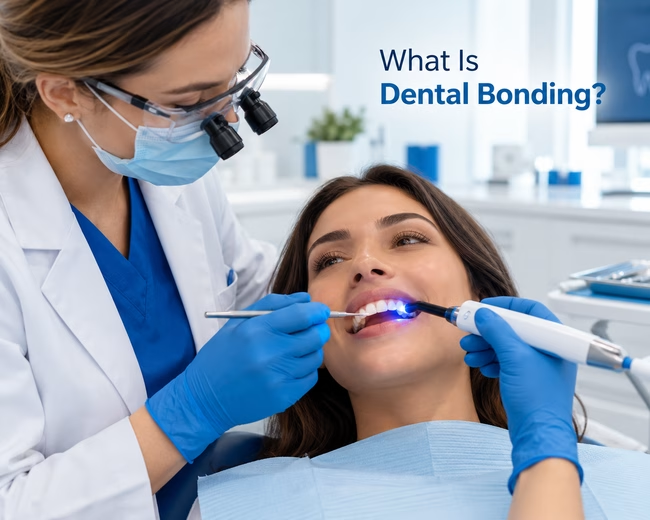
Dental bonding is a cosmetic treatment where a dentist applies a putty-like, tooth-colored resin to the surface of a tooth, shapes it by hand, hardens it with a blue curing light, and then polishes it smooth. You’ll also hear it called composite bonding or tooth bonding. They’re all the same procedure.
The appeal is simple. Instead of covering or reshaping the whole tooth, we add material only where it’s needed. A chipped corner gets rebuilt. A narrow gap gets softened from both sides. A short tooth gets a little extra length so it lines up with its neighbors. Because nothing has to be made in a lab, you walk out with the finished result the same day.
What Is Bonding Made Of?
Bonding is made of composite resin, a blend of plastic resin and fine glass-like filler particles. That mix can be layered in different shades and levels of translucency, which is why a well-done repair is hard to spot from across the table. According to the Cleveland Clinic, composite resin is somewhat stain-resistant but doesn’t resist stains as well as porcelain, something we’ll talk about when we plan your care.
What Can Cosmetic Bonding Fix?
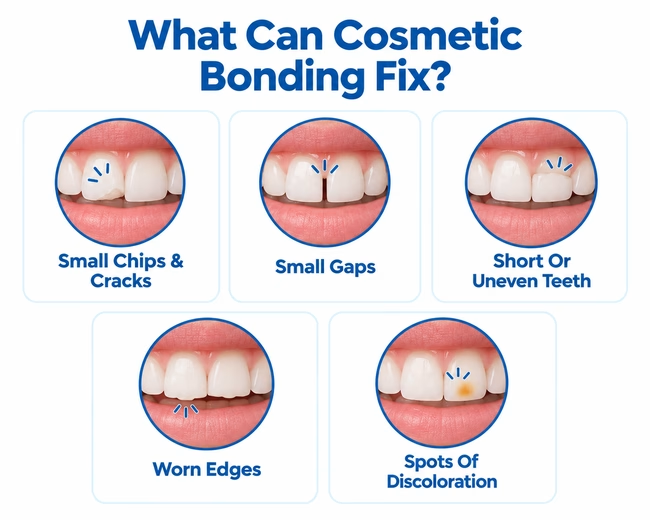
Bonding works best on small, visible flaws in otherwise healthy teeth. In our chair, the most common requests look like this:
- Small chips and cracks: a front tooth that caught the edge of a water bottle or a fork.
- Small gaps: a space between the two front teeth that’s always bothered you in photos.
- Short or uneven teeth: one tooth that sits a little higher than the rest of your smile line.
- Worn edges: corners that have thinned or flattened over the years.
- Spots of discoloration: a white fleck or dark spot on one tooth that whitening won’t touch.
What Dental Bonding Can’t Fix, and What We Recommend Instead
Bonding is a great tool, but it isn’t the right one for every job. Resin is softer than enamel and porcelain, so it struggles under heavy force and large repairs. When we see one of the situations below, we’ll tell you plainly and point you toward something that will hold up better.
| Your Concern | Why Bonding Falls Short | What Usually Works Better |
|---|---|---|
| Large break or a tooth with a big old filling | Resin can't support that much missing structure | Porcelain crowns |
| Several teeth with shape and color changes | Hard to keep many resin repairs uniform over time | Porcelain veneers |
| Crowding, crooked teeth or bite problems | Adding resin can't move teeth into position | Invisalign |
| Overall yellowing across the whole smile | Bonding covers spots, not your natural shade | Teeth whitening |
| Heavy grinding or clenching | Repeated force chips resin edges | Bite evaluation first, then a stronger material |
Sometimes the answer is a mix. A patient might whiten first, then bond one stubborn chip to match the brighter shade. We’ll map out the order that makes sense for your smile.
Is Dental Bonding Right for You?
A quick self-check can tell you a lot before your visit. Compare where you land:
| Bonding is likely a good fit if... | You may need another option if... |
|---|---|
| Your teeth and gums are healthy | You have active decay or gum inflammation |
| The change you want is small | You want a dramatic shape or color overhaul |
| You're treating one to four teeth | Many teeth need matching work |
| Your bite is fairly even | You grind at night or often wake with a sore jaw |
| You want results today | You want the most stain-resistant surface possible |
If you’re sitting between the two columns, that’s normal. It’s exactly what a consultation is for.
How We Plan Your Bonding at Elegant Edge
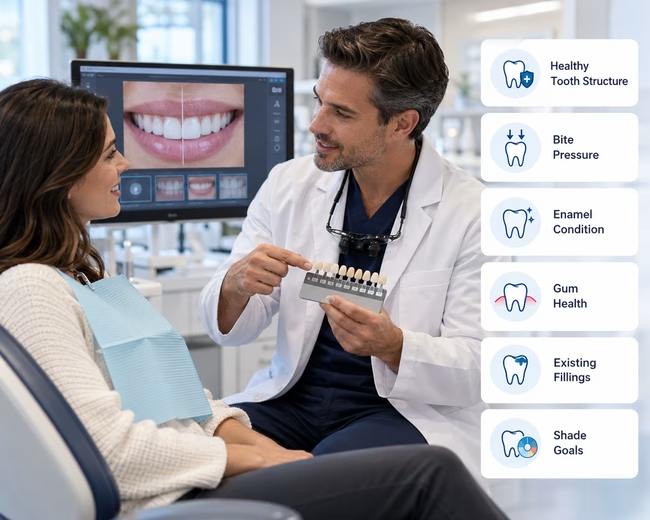
Most bonding problems start before the resin ever touches the tooth. A repair that looked great on day one can fail early if the bite wasn’t checked or if the patient whitens a month later and the bonding suddenly looks darker. That’s why our dentists look at more than the chip itself. Before recommending bonding, we check:
- How much healthy tooth structure is left to hold the resin
- Where your teeth meet when you bite and chew, and how much pressure lands on the repair
- The condition of your enamel, including thin or worn areas
- Gum health around the tooth, since inflamed gums make shade and shape harder to judge
- Existing fillings or old bonding that may need replacing at the same time
- Your shade goals, including whether you’d like to whiten first
That last point matters more than most people expect. Composite resin doesn’t lighten with whitening gel, and the American Dental Association notes that bleaching affects natural teeth only. So if a brighter smile is on your wish list, we’ll usually whiten before we bond and then match the resin to your new shade.
The Dental Bonding Process, Step by Step
Here’s what happens in the chair, from start to finish:
Consult and Shade Match
We talk through your goal and hold shade guides next to your tooth in natural light to pick the closest resin colors.
Light Surface Prep
We gently roughen the enamel and apply a conditioning liquid so the resin can grip the tooth.
Apply and Sculpt
Resin goes on in thin layers. Your dentist shapes each one by hand to rebuild the edge, close the gap, or add length.
Harden With a Curing Light
A blue light sets each layer in seconds.
Shape and Polish
We refine the outline and polish the surface until it reflects light like the teeth around it.
Bite Check
You’ll bite on marking paper so we can smooth any high spots before you leave.
The Cleveland Clinic estimates about 30 to 60 minutes per tooth. Treating two or three teeth can often happen in one relaxed appointment.
Does Dental Bonding Hurt?
Usually not. Most cosmetic bonding happens on the enamel surface, where there are no nerves, so many patients don’t need numbing at all. We may recommend local anesthetic if the repair sits close to the nerve, if we’re removing decay first, or if the tooth is already sensitive. If dental visits make you nervous, ask about sedation dentistry options when you book.
Does Bonding Require Drilling?
In most cosmetic cases, little or none. We lightly texture the surface rather than cutting the tooth down. More preparation may be needed if old bonding or a failing filling has to come off first, or if decay is present under the area we’re repairing.
How Long Does Dental Bonding Last?
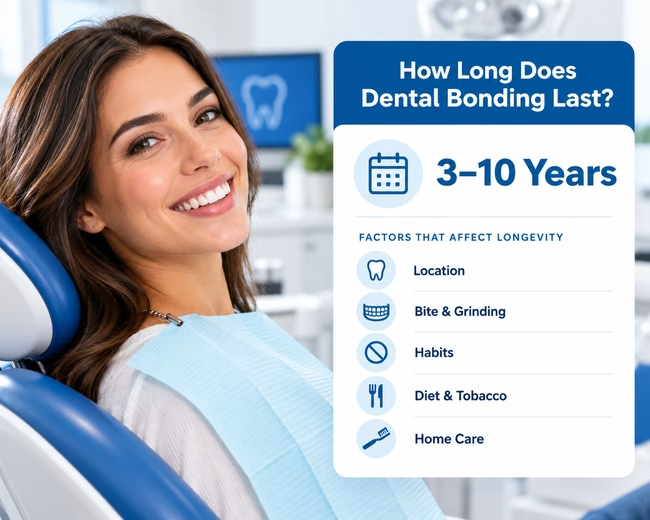
Dental bonding typically lasts about 3 to 10 years before it needs a touch-up or replacement, according to the Cleveland Clinic. Where your result falls in that range depends on a few things:
- Location: A repair on a front edge takes more biting force than one near the gumline.
- Bite and grinding: Clenching or night grinding wears resin faster.
- Habits: Chewing ice, pens, fingernails, or opening packages with your teeth can chip resin.
- Diet and tobacco: Coffee, tea, red wine, and smoking dull the surface over time.
- Home care and cleanings: Regular teeth cleaning visits let us polish bonding and catch small chips early.
Can Bonding Chip or Stain, and Can It Be Fixed?
Yes on both counts, and yes, it’s usually fixable. Resin picks up stains more easily than porcelain, so a bonded tooth can slowly look a bit duller than its neighbors. A professional polish often brings back the shine. Small chips can usually be repaired by adding fresh resin in a short visit, without redoing the entire tooth.
When Bonding Makes More Sense, and When Veneers Do
Bonding tends to be the better choice when:
- You’re fixing one or two teeth
- The change is small, and you want it done today
- You’d like to keep as much natural enamel as possible
- Budget is a bigger factor than maximum lifespan
Veneers tend to be the better choice when:
- You’re changing the shape or color of several front teeth
- You want a uniform, long-lasting result across your smile
- Stain resistance matters a lot to you
- You’re planning a full smile makeover
For some chipped or gapped teeth, we may also talk with you about Bioclear, a structured resin technique that can be a middle ground between simple bonding and veneers.
How Much Does Dental Bonding Cost in Rochester Hills?
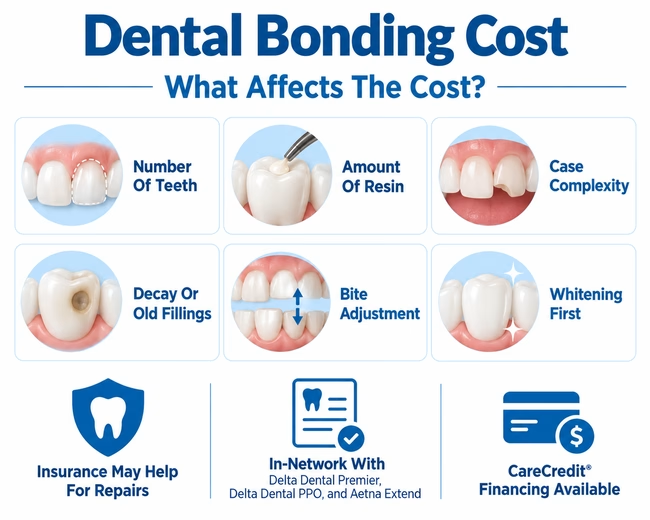
Bonding is generally one of the more affordable cosmetic options because it’s done in one visit without a lab. Your exact fee depends on:
- How many teeth we’re treating
- How much resin each repair needs
- How complex the shaping is (a simple chip vs. closing a gap or adding length)
- Whether decay or an old filling needs attention first
- Whether your bite needs adjusting to protect the repair
- Whether you’d like to whiten before bonding
Dental insurance may help when bonding repairs damage, such as a broken tooth, but plans usually don’t cover changes that are purely cosmetic. Our team will check your benefits before treatment. We’re in-network with Delta Dental Premier, Delta Dental PPO, and Aetna Extend, and we offer CareCredit financing for patients who’d like to spread out the cost.

Why Patients Choose Elegant Edge Dentistry for Bonding
Bonding is an art as much as a procedure. The resin is shaped freehand, so the result depends on the eye and experience of the dentist holding the instrument. Here’s what you can expect with us:
- Experienced hands: Dr. Gregory Mansour earned his DDS from the University of Detroit Dental School, graduating second in his class, and completed a General Practice Residency at Sinai Hospital of Detroit. He has been caring for patients since 1992 and is an Academy of General Dentistry member.
- A second trusted dentist: Dr. James Tangalos earned his DMD from Nova Southeastern University and completed a hospital-based residency at St. Joseph Mercy Oakland, with a focus on functional occlusion, the way teeth fit together.
- Honest recommendations: If bonding isn’t the best tool for your tooth, we’ll say so and explain the alternatives.
- Hours that fit real life: Evening appointments Tuesday until 8 PM and Wednesday and Thursday until 7 PM.
- Easy to reach: We’re on the corner of Auburn Rd. and Alexander St., a short drive from Rochester, Troy, and Auburn Hills.
Small flaw, simple fix? Let’s take a look.
Frequently Asked Questions
Can I Get Dental Bonding on My Back Teeth?
You can, but it’s less common for cosmetic purposes. Back teeth take much heavier chewing forces, so we usually suggest a filling, onlay, or crown there. Bonding is mainly a front-tooth solution.
How Soon Can I Eat After Bonding?
Right away, since the resin is fully hardened before you leave, we do suggest avoiding coffee, tea, and red wine for the first 48 hours, because fresh resin can pick up stains more easily at first.
Will People Be Able to Tell My Tooth Was Bonded?
In most cases, no. We layer and polish the resin to mimic the color and translucency of your enamel. Over the years, bonding can look slightly duller than natural teeth, and a quick polish usually restores the match.
Can Teenagers Get Cosmetic Bonding?
Yes. Bonding is often a good option for teens with a chipped front tooth from sports or a fall, because it adds material without removing much enamel. We’ll confirm the tooth and gums are healthy and discuss a mouthguard to protect the repair.
Is Bonding a Good Way to Fix a Single Dark Tooth?
It depends on the cause. A tooth that has darkened from the inside is often worth checking first, since nerve damage can be involved. Bonding or a veneer can then mask the color once the tooth is healthy.
How Do I Care for Bonded Teeth at Home?
Brush twice a day with a non-abrasive toothpaste, floss daily, and keep up with your regular checkups. Skip chewing ice or hard objects, and wear a night guard if you grind.