
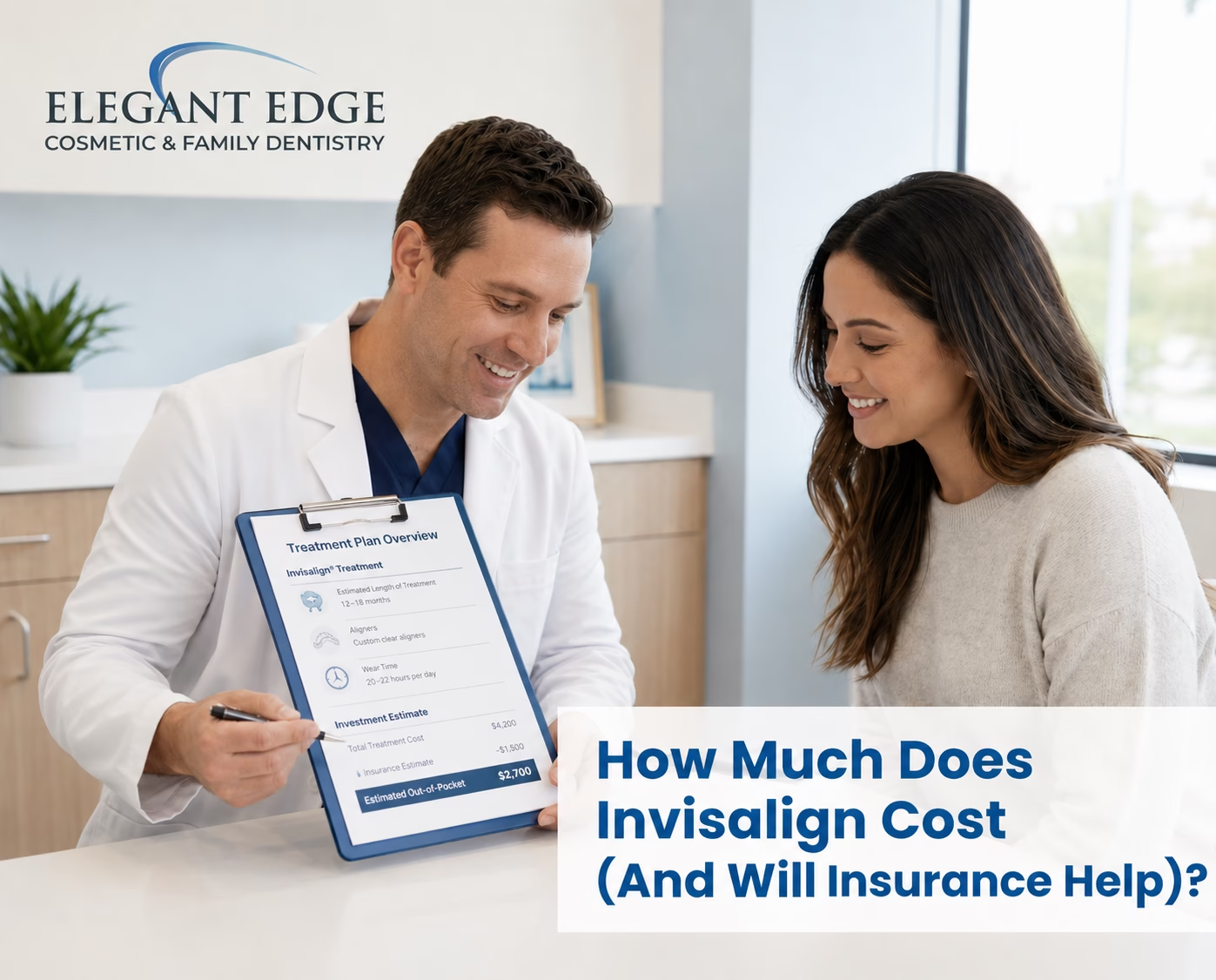
Two questions usually come together: how much does Invisalign cost, and will insurance pick up any of it? You deserve straight answers to both. This guide gives you real national price ranges, explains what pushes your cost up or down, and clears up the insurance detail that trips up almost everyone: the lifetime orthodontic maximum. Dr. Mansour is a Platinum Invisalign Provider, so this reflects real-world treatment, not just brochure numbers.
Key Takeaways
- National Invisalign pricing generally falls between $3,000 and $8,000, based mostly on case complexity and length.
- Minor spacing fixes cost far less than full bite corrections, so two people can pay very different amounts.
- Many dental plans with orthodontic benefits cover Invisalign like braces, often contributing $1,000 to $3,000.
- A lifetime orthodontic maximum caps what insurance pays; 50 percent coverage does not mean half of any amount.
- HSA and FSA dollars, monthly payment plans, and CareCredit can stack to make treatment affordable.
- Invisalign and braces usually cost about the same; the difference is case type and lifestyle fit.
How Insurance Often Helps?
Most Invisalign treatment lands in the $3,000 to $8,000 range. Two things move you within it: how complex your case is, from simple spacing to a full bite correction, and how long treatment runs. On the insurance side, the headline is encouraging. Plans that include orthodontic benefits often treat Invisalign the same as traditional braces and contribute a meaningful amount toward the total. These are sourced ranges; your exact figure comes from a consultation and a digital scan.
What Determines Where You Land in That Range
Why does your neighbor pay less than you for the same brand? A few factors:
- Case complexity, from minor spacing to correcting a deep bite or rotation.
- The number of aligners and any refinements needed to finish.
- How long treatment takes, since longer cases use more materials and visits.
- The provider’s experience level and how the practice structures its fees.
A short case with a handful of aligners naturally costs less than a comprehensive one that runs well over a year.
Cost by Case Type: Minor Fixes to Full Correction
Grouping cases by complexity helps you self-locate before you ever get scanned.
| Case type | Typical range | What it treats |
|---|---|---|
| Express/minor | $1,500 – $3,500 | Small spacing or slight crowding, a few teeth |
| Moderate | $3,500 – $5,500 | Noticeable crowding or spacing across the arch |
| Comprehensive | $5,000 – $8,000+ | Bite correction and complex tooth movement |
If you only have a little relapse from old braces, you are likely near the bottom of the range. A full bite overhaul sits at the top.
The ‘Lifetime Maximum’ Trap: Why 50% Coverage Isn’t Really 50%
This is where most people get a surprise. Orthodontic benefits usually carry a lifetime maximum, a hard cap on what the plan will ever pay toward orthodontics. That cap overrides the percentage. Walk through the math:
- Your plan says it covers 50 percent of orthodontic treatment.
- Your Invisalign case costs $6,000, so 50 percent looks like $3,000.
- But your plan has a $2,000 lifetime orthodontic maximum.
- The plan pays $2,000, not $3,000, because the cap is the ceiling.
Read the percentage and the lifetime maximum together, because the lower of the two is what you actually receive. Knowing this before you start prevents a budgeting shock later.
How to Check Your Benefits Before You Commit
You can confirm your coverage in three ways:
- Read the orthodontic section of your policy for the coverage percentage and any lifetime maximum.
- Call your insurer and ask three questions: Do I have orthodontic benefits, what is my lifetime maximum, and is there an age limit?
- Let our team run a benefit check or pre-authorization so the answer comes back in writing.
We verify benefits for patients regularly, so you do not have to decode the fine print alone.
Stretching Your Dollars: HSA, FSA, and Financing
Even after insurance, a few tools soften the remaining cost:
- HSA and FSA accounts let you pay with pre-tax dollars, since Invisalign is generally an eligible expense.
- Monthly payment plans spread the balance over the course of treatment.
- CareCredit financing, accepted at our office, breaks the cost into manageable payments.
Stacked together, these can turn a large one-time figure into a comfortable monthly amount.
Invisalign vs. Braces: The Cost Comparison
A common myth is that Invisalign always costs more. In practice, the two are usually comparable, and the real differences come from case type and lifestyle.
| Factor | Invisalign | Traditional braces |
|---|---|---|
| Typical cost | $3,000 – $8,000 | $3,000 – $7,000 |
| Appearance | Clear, removable aligners | Visible brackets and wires |
| Emergency visits | Fewer, no broken brackets | More, for loose wires or brackets |
| Best for | Mild to moderate, some complex cases | A wide range, including complex cases |
If you are weighing the two, our traditional braces page explains where fixed braces still shine, so you can choose based on more than price.
Why Provider Experience Affects Both Price and Outcome
Invisalign ranks providers by how many cases they treat, and Platinum status reflects a high case volume and hands-on experience. That experience matters for your wallet as well as your smile: an experienced provider can plan movements accurately from the start, which often means fewer refinements and a smoother finish. Dr. Mansour is a Platinum Invisalign Provider, and you can read more about his training on the Dr. Gregory Mansour bio page.
What a Consultation Includes (and What It Costs You to Find Out)
The next step is simple and low-pressure:
- An exam to confirm your teeth and gums are ready for treatment.
- A digital scan that maps your teeth and previews the movement.
- A personalized treatment plan with a written quote.
- A benefit verification so you see your real out-of-pocket cost.
Starting with healthy teeth matters, so a routine dental checkup pairs well with an Invisalign consult. If you are new to the practice, the new patients page covers what to bring.
Get a clear plan and a real number with your benefits applied. Dr. Gregory Mansour, a Platinum Invisalign Provider, and our team verify your insurance, offer CareCredit, and keep evening appointments. Contact us to schedule your visit or book an appointment.
Frequently Asked Questions
Does Invisalign cost more for teens or adults?
The price is driven by case complexity, not age, so a straightforward teen case can cost less than a complex adult one and vice versa. The bigger age-related factor is insurance, since some plans only cover orthodontics for dependents under a set age. Check your plan’s age limit when comparing costs.
What happens to the price if I lose an aligner?
A single lost aligner is usually a minor issue. Your provider may have you move to the next set or order a replacement, and many treatment plans build in some flexibility for this. Frequent losses can add small costs or extend treatment, so keep aligners in their case when they are out.
Are retainers after Invisalign included in the cost?
It depends on the practice. Some Invisalign quotes include your first set of retainers, while others price them separately. Retainers are essential, since teeth can drift back without them, so ask whether they are part of your quote and what replacements cost down the road.
