
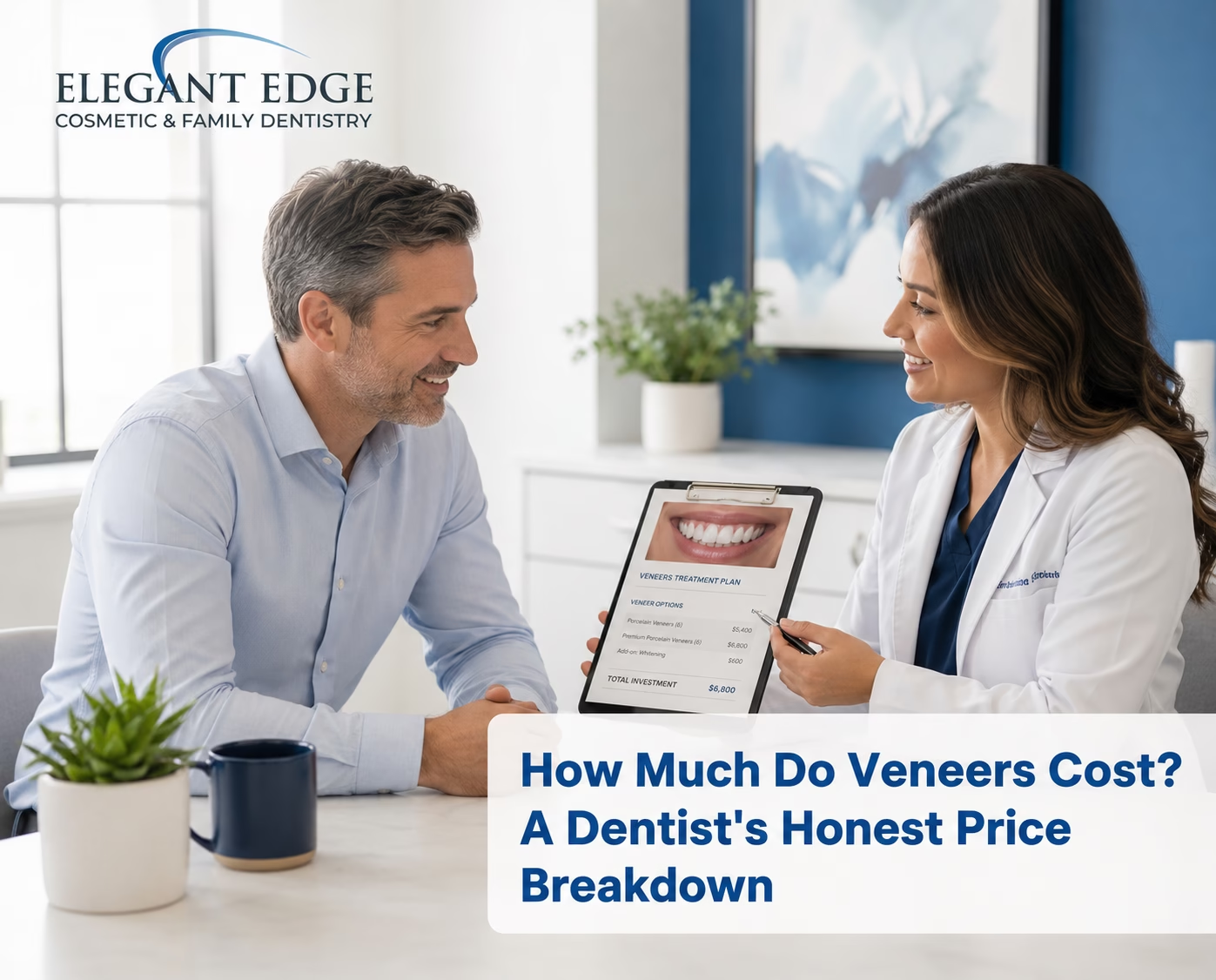
Search how much veneers cost, and you get a wall of vague answers. This breakdown is different. You will find real national ranges, a clear look at what drives the price, the truth about insurance, and practical ways to make veneers affordable.
We will not quote a fixed price for our office, because honest veneer pricing depends on your teeth and goals, but you will leave knowing enough to plan with confidence.
Key Takeaways
- Per-tooth ranges run about $900 to $2,500 for porcelain, $250 to $1,500 for composite, and $800 to $2,000 for ultra-thin veneers.
- Porcelain costs more but usually lasts longer and looks more natural than composite.
- A full smile often needs six to eight veneers, not a whole mouth, so many people need fewer than they expect.
- Insurance rarely covers veneers because they are cosmetic, though partial coverage is possible when restoring damaged teeth.
- Financing such as CareCredit, phased treatment, and HSA or FSA dollars can make the cost manageable.
- Looking at cost per year, not just sticker price, often makes longer-lasting porcelain the better value.
The Quick Numbers: What Veneers Typically Cost
Here are the ballpark national ranges most sources report. These are averages, not quotes, and your exact price comes from an exam.
| Veneer type | Typical cost per tooth | Notes |
|---|---|---|
| Porcelain | $900 – $2,500 | Most natural look and longest lifespan |
| Composite | $250 – $1,500 | Lower cost, faster, shorter lifespan |
| Ultra-thin / Lumineers | $800 – $2,000 | Minimal-prep, preserves more enamel |
Price alone does not tell the whole story, so the sections below explain what changes where you land in these ranges.
Porcelain vs. Composite vs. Lumineers: Cost and Trade-Offs
The choice most people are really making is between materials. Each balances price, lifespan, and appearance differently.
| Factor | Porcelain | Composite | Lumineers |
|---|---|---|---|
| Cost per tooth | $900 – $2,500 | $250 – $1,500 | $800 – $2,000 |
| Typical lifespan | 10 – 15+ years | 5 – 7 years | 10 – 15+ years |
| Appearance | Very natural, stain-resistant | Good, can stain over time | Natural, very thin |
| Enamel prep | Thin layer reshaped | Minimal to moderate | Little to none |
Porcelain generally wins on longevity and stain resistance, composite wins on upfront cost and speed, and ultra-thin options appeal to anyone who wants to preserve enamel. There is no single right answer, only the right fit for your goals and budget.
What You’re Actually Paying For
A veneer fee is not just the shell of porcelain. You are paying for the expertise and materials that make the result look natural and last.
- The dentist’s skill in smile design, shaping, and bonding.
- The quality of the dental lab and ceramist who craft each veneer.
- The material itself and how well it resists stains and wear.
- Technology such as digital scans and smile previews.
- The number of visits and the chair time involved.
This is why the cheapest quote rarely means the best value in cosmetic work. A poorly fitted veneer can cost more in the long run through repairs and replacements.
Full Smile Math: Costs for 4, 6, or 8 Veneers
Most people show four to eight teeth when they smile, so a full smile makeover usually means treating that visible zone rather than every tooth. Multiply the per-tooth range by the number of teeth for a rough total.
| Number of veneers | Number of veneers | Common use |
|---|---|---|
| 4 veneers | $3,600 – $10,000 | The four front teeth |
| 6 veneers | $5,400 – $15,000 | The most common smile zone |
| 8 veneers | $7,200 – $20,000 | A wider, fuller smile line |
Many smiles look complete with six veneers, and some need fewer, so do not assume you need a mouth full of them. A smile makeover plan maps out exactly how many teeth to treat for a balanced result.
Hidden and Preparatory Costs to Ask About
A few line items surprise people, so ask about them upfront:
- The exam and any needed X-rays or scans.
- A cleaning before cosmetic work begins.
- Treating decay or gum disease first, which must come before veneers.
- Temporary veneers while the finals are made.
- A nightguard if you grind, which protects the new veneers.
Addressing gum disease before veneers is not an upsell; healthy gums are what keep the edges of a veneer sealed and looking clean.
Does Insurance Cover Veneers?
Because veneers are considered cosmetic, most dental plans do not cover them. There are exceptions: when a veneer restores a tooth that is damaged or broken, part of the cost may qualify for coverage.
Our office is in-network with Delta Dental Premier, Delta Dental PPO, and Aetna Extend, and our team is glad to verify your benefits so you know exactly what applies before you commit.
Making It Affordable: Financing and Payment Options
A larger cosmetic case does not have to be paid all at once. Options that help include:
- CareCredit financing, which our office accepts, spreads the cost into monthly payments.
- Phased treatment lets you complete veneers in stages over time.
- HSA or FSA dollars may apply in some situations; ask your plan administrator.
- Starting with the most visible teeth first and adding more later.
Cost per Year: Why Longevity Changes the Math
Sticker price can be misleading. Look at cost per year instead. A porcelain veneer near $1,500 that lasts 15 years works out to about $100 a year. A composite veneer near $700 that lasts 6 years is roughly $117 a year, and you replace it sooner. Suddenly the more expensive option can be the more economical one. That reframe helps many patients decide between materials with clear eyes.
When Bonding or Whitening Is the Smarter Spend
Veneers are not always the right investment. If your concern is narrow, a smaller treatment may deliver what you want for far less.
| If your issue is | Consider | Rough savings |
|---|---|---|
| Overall yellowing | Professional whitening | A fraction of veneer cost |
| One or two small chips | Cosmetic bonding | Much less per tooth |
| A single dark tooth | Bonding or targeted treatment | Avoids a full veneer set |
For stain-only cases, professional teeth whitening is a low-cost first step, and small chips often look great after cosmetic bonding. We would rather point you to the right treatment than oversell veneers you do not need.
What Happens at a Veneer Cost Consultation
A consultation should feel like planning, not pressure. Here is what to expect:
- A conversation about your smile goals and what bothers you.
- An exam and digital X-rays to check the health of your teeth and gums.
- A discussion of material options and how many teeth to treat.
- A written, personalized quote so there are no surprises.
We use digital X-rays to confirm the foundation is healthy, and Dr. Mansour’s cosmetic experience, outlined on the Dr. Gregory Mansour bio page, guides the plan. If you are new to us, the new patients page explains what to bring to your first visit.
The only way to get your real number is a personalized quote. Dr. Gregory Mansour and our team offer honest consultations, CareCredit financing, and convenient evening appointments. Contact us to schedule your visit or book an appointment – Call (248) 852-3130
Frequently Asked Questions
Why do veneer prices vary so much between dentists?
Price reflects the dentist’s cosmetic training, the lab and ceramist quality, the material chosen, the technology used, and the local cost of care. A higher fee often buys better craftsmanship and longevity. The lowest quote can end up costing more if the veneers need frequent repair or early replacement.
Are cheaper veneers abroad worth it?
Lower upfront prices abroad can be tempting, but they come with trade-offs: limited follow-up care, variable standards, aggressive tooth reduction in some cases, and travel costs if something needs fixing. Weigh the savings against the difficulty of getting local support if a problem appears after you return home.
Can I get veneers on just one or two teeth?
Yes. Single-tooth veneers are common, especially for a chipped or discolored front tooth. The main challenge is matching the veneer perfectly to the shade and shape of the neighboring natural teeth. A skilled dentist and ceramist can blend one or two veneers, so they are hard to tell apart from your natural teeth.
