
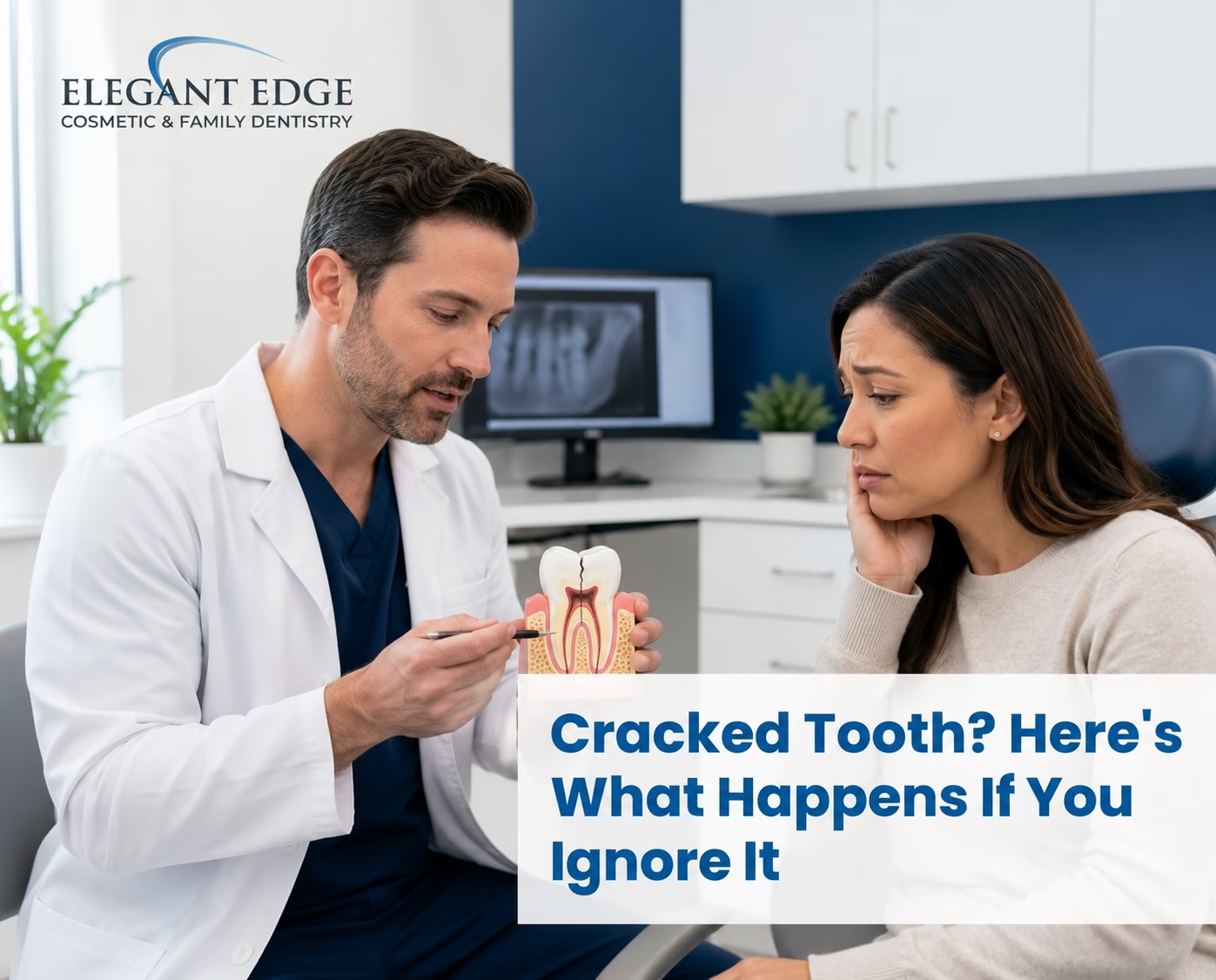
It is tempting to wait. The tooth only twinges when you bite a certain way, the pain fades, and life is busy. That is exactly how a cracked tooth slips from a simple fix to a much bigger one.
Here is the honest version, without the scare tactics: teeth cannot repair themselves, and a crack caught early is almost always cheaper and simpler to treat than one left to spread. This guide walks you through the crack types, the warning signs, and what actually happens the longer you put it off.
Key Takeaways
- Cracks do not close up or heal; chewing pressure gradually works them wider over time.
- There are five crack types, from harmless craze lines to a serious vertical root fracture, and urgency depends on which one you have.
- Symptoms can be sneaky: sharp pain on biting or releasing, sensitivity, and pain that comes and goes fool many people into waiting.
- Ignoring a crack can move you from a simple bonding or crown to a root canal, and eventually to extraction with an implant or bridge.
- Pain that suddenly stops is not always good news; it can mean the nerve has died while the underlying problem continues.
- Dentists use bite tests, special lighting, dye, and digital imaging to find cracks you cannot see yourself.
Cracks Don’t Heal, They Spread
A broken bone knits back together because living tissue rebuilds it. A tooth crown is different. The enamel and dentin that make up the part you chew with have no blood supply and no way to regenerate.
Every bite you take flexes the crack slightly, and over weeks and months that repeated stress drives it deeper. As the gap widens, bacteria and food debris slip inside, closer to the nerve.
This is why catching a crack early matters so much: a shallow crack is often solved with a simple restoration, while a deep one can threaten the whole tooth.
Not All Cracks Are Equal: The 5 Types
Dentists group cracks by how deep and how serious they are. Knowing which type you may be dealing with helps you understand the urgency.
Split tooth
| Crack type | What it is | Urgency |
|---|---|---|
| Craze lines | Tiny surface cracks in the enamel only, common in adults | Low – usually cosmetic |
| Fractured cusp | A piece of the chewing surface breaks, often around a filling | Moderate – repair to prevent worsening |
| Cracked tooth | A crack running from the surface toward the root, nerve still attached | High – treat promptly to save the tooth |
| Split tooth | The crack has separated the tooth into segments | Very high – part or all may need removal |
| Vertical root fracture | A crack starting at the root and moving up, often quiet at first | Very high – frequently ends in extraction |
Signs You Might Have a Crack (Even Without Constant Pain)
The frustrating thing about cracked teeth is that the symptoms rarely stay put. Because a crack only hurts when it flexes, the pain often disappears between bites, which is exactly what convinces people to wait. Watch for these clues:
- A sharp, sudden pain when you bite down, or oddly, when you release the bite.
- Sensitivity to hot, cold, or sweet foods that lingers on one tooth.
- Pain that comes and goes rather than a steady ache.
- A tooth that simply feels off or that you instinctively avoid chewing on.
- Discomfort that is hard to pin to one exact tooth.
Stage by Stage: What Ignoring It Actually Looks Like
Here is the progression when a crack goes untreated. It rarely all happens at once, which is part of the trap.
- The crack flexes and deepens. Chewing pressure widens it, and sensitivity or biting pain becomes more frequent.
- Bacteria reach the pulp. Once the crack exposes the nerve, the pulp becomes inflamed (pulpitis), bringing throbbing pain and lingering sensitivity.
- Infection sets in. A dying pulp can lead to an abscess, with swelling, a bad taste, and sometimes fever – a point where it becomes urgent.
- The crack extends below the gumline. When it reaches the root, the tooth may split and can no longer be saved, moving you into extraction territory.
Why ‘It Stopped Hurting’ Can Be Bad News
Relief is not always recovery. When the pain from a cracked tooth suddenly fades, it can mean the nerve inside has died rather than that the tooth has healed. A dead nerve stops sending pain signals, but the bacteria and infection do not stop; they can quietly build into an abscess. So if a painful tooth goes silent on its own, treat that as a reason to be seen, not a reason to relax.
The Cost of Waiting (Treatment Escalation)
Early care usually means a smaller, less involved procedure. The longer a crack spreads, the more complex and costly the fix becomes. This comparison shows the general direction, not specific fees.
| Caught early | Left to progress |
|---|---|
| Bonding or a single crown | Root canal plus a crown |
| One or two visits | Multiple visits |
| Lower relative cost | Higher relative cost |
| Natural tooth preserved | Possible extraction with implant or bridge to replace it |
Depending on the tooth, early treatment might be as straightforward as cosmetic bonding or a porcelain crown, while a crack that reaches the nerve often needs root canal therapy first.
If a tooth is lost, replacements like dental implants or dental bridges restore function but involve more time and expense than saving the original tooth would have.
How Dentists Find Cracks You Can’t See
Hearing I can’t see anything wrong does not mean nothing is there. Many cracks are invisible to the naked eye, so dentists rely on several tools together:
- Bite tests, where you press on a small tool tooth by tooth to reproduce the telltale pain on release.
- Transillumination, shining a bright light through the tooth so a crack casts a shadow.
- Dye staining, which seeps into a crack and makes it visible.
- Digital imaging, which reveals decay, root problems, and bone changes around the tooth.
Our office uses digital X-rays and a careful clinical exam to build the full picture, since some cracks show up only when several of these findings line up.
What to Do Right Now If You Suspect a Crack
A few sensible steps can protect the tooth while you arrange care:
- Avoid chewing on that side of your mouth to keep from flexing the crack.
- Skip very hard or crunchy foods, ice, and sticky candy that put stress on the tooth.
- Note your symptoms: what triggers the pain, how long it lasts, and whether anything has changed.
- Book a dental evaluation soon rather than waiting for the pain to force the issue.
- Call the emergency line if you have severe pain, facial swelling, or the crack followed an injury.
Protecting Your Teeth From Future Cracks
Once a tooth is repaired, a little prevention keeps the next crack from forming. If you grind or clench, a custom nightguard absorbs the force that fractures teeth, and a TMJ treatment evaluation helps when jaw tension is part of the pattern. Skip chewing ice and hard candy, wear a mouthguard for contact sports, and have large or aging fillings checked, since heavily filled teeth are more prone to cracking. Regular dental checkups catch small cracks and worn restorations before they turn into painful surprises.
Contact Us to Schedule Your Visit:
book an appointment | Call (248) 852-3130
Frequently Asked Questions
Can a cracked tooth show up on an X-ray?
Sometimes, but not always. Many cracks run in a direction that does not show clearly on standard imaging, so dentists combine X-rays with bite tests, special lighting, and dye to confirm one. X-rays are still valuable because they reveal related decay, infection, and bone changes around the tooth.
Is it okay to chew on the other side until my appointment?
Yes, favoring the opposite side is a smart short-term move because it keeps you from flexing the crack and making it worse. Treat it as a temporary measure, not a solution. The crack still needs an evaluation soon, since it can continue to deepen even when you avoid that tooth.
Do cracked teeth always need a crown?
Not always. Tiny craze lines often need nothing, and a small fractured cusp may be fixed with bonding. Deeper cracks usually do need a crown to hold the tooth together and stop the crack from spreading. The right treatment depends on how deep the crack runs and whether the nerve is involved.
