
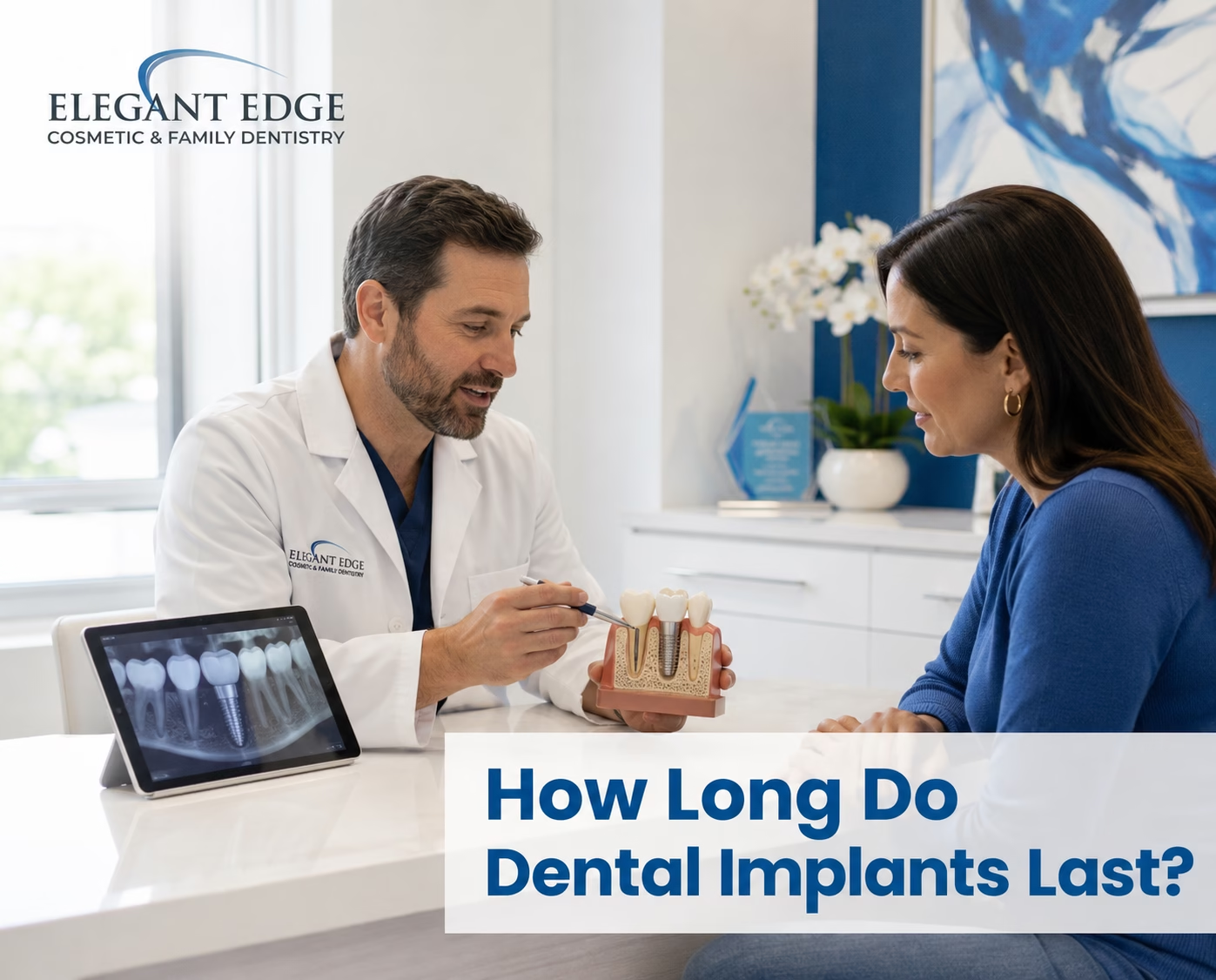
Among modern tooth replacement options, dental implants offer the greatest longevity. While the titanium post is intended to remain for a lifetime, boasting success rates exceeding 95% over a decade, the visible crown generally requires replacement every 10 to 15 years. Your implant’s durability is primarily determined by consistent oral hygiene, gum health, and routine professional evaluations.
The titanium post is designed to last a lifetime, and clinical research shows success rates above 95 percent at the 10-year mark. The visible crown on top typically lasts 10 to 15 years before it needs to be replaced. Daily care, healthy gums, and regular checkups are the biggest factors in how long yours will serve you.
Key Takeaways
- The implant post fuses with your jawbone and can last a lifetime with proper care.
- The crown on top usually lasts 10 to 15 years and can be replaced without redoing the surgery.
- Oral hygiene is the biggest factor in long-term success.
- Smoking and unmanaged teeth grinding can shorten an implant’s lifespan significantly.
- Implants preserve jawbone, unlike bridges or dentures, which means a healthier mouth over time.
How Many Years Does a Dental Implant Usually Last?
The short answer is 15 to 25 years for most patients, with many implants lasting a lifetime. The longer answer depends on which part of the implant we are talking about. An implant has three pieces, and each piece has its own life expectancy.
Understanding the three parts is the easiest way to make sense of the numbers, so let us walk through them.
How Long Does the Implant Post Last?
The titanium post is the screw-shaped piece that goes into the jawbone during dental implant surgery. Over the following weeks and months, bone cells grow directly around the post and lock it in place. That process is called osseointegration.
Once the post is fully integrated, it behaves much like a natural tooth root. Long-term studies show success rates of 95 to 98 percent at 10 years and around 90 percent at 20 years. Most failures that do occur happen in the first year while the bone is still settling. After that, with good gum health, the post itself rarely fails.
How Long Does the Crown Last?
The crown is the visible tooth that screws or cements onto the implant. It handles every bite, every coffee sip, every bite of breakfast. Like any dental crowns, it wears with time. The average lifespan is 10 to 15 years.
Back-tooth crowns tend to wear faster because they take the brunt of chewing pressure. Front-tooth crowns hold up longer since they handle less force. The good news is that replacing the crown is a far smaller procedure than the original surgery. The post stays in place. We simply make a new crown and attach it.
What About the Abutment?
The abutment is the small connector that joins the post and the crown. It is the part most patients never see. Abutments usually last 15 to 20 years and are often replaced at the same time as the crown.
If you see a diagram of an implant in the office, the post is the screw, the abutment is the cylinder on top, and the crown is the tooth-shaped piece. Three parts, three different timelines.
What Factors Affect How Long Dental Implants Last?
Two patients can get the same implant on the same day and end up with very different results 20 years later. The reasons usually come down to a few habits and health factors.
How Does Oral Hygiene Impact Implant Longevity?
This is the single biggest factor under your control. Implants cannot get cavities, but they can develop a gum infection called peri-implantitis. It looks and behaves like gum disease around a natural tooth: red, swollen tissue, bleeding when you brush, and a slow loss of bone support if it is not treated.
Brushing around the implant twice a day, flossing daily with a floss threader or water flosser, and keeping up with cleanings every six months drops your risk dramatically. Hands down, the patients with implants that last 25 years and beyond are the ones who care for them at home.
Professional teeth cleaning also matters more after an implant. Dental hygienists utilize specialized instruments safe for implant materials to monitor the health of adjacent tissues, identifying potential issues before they become symptomatic.
Does Smoking Shorten Implant Lifespan?
Yes, and the impact is significant. Smoking reduces blood flow to the gums, slows healing after surgery, and raises the risk of peri-implantitis. Studies consistently show that smokers experience implant failure rates two to three times higher than non-smokers.
Your dentist may recommend quitting before surgery or, at minimum, stopping in the weeks leading up to and after the procedure. The bone needs every advantage during osseointegration, and clean blood flow is at the top of the list.
Can Teeth Grinding Damage an Implant?
Yes. Bruxism puts extreme pressure on the crown of an implant. Over time, it can crack the porcelain, loosen the abutment, or stress the bone around the post. People often grind in their sleep and have no idea.
A custom night guard is one of the simplest ways to protect your investment. Since many individuals are unaware they grind their teeth during sleep, a custom night guard provides an easy solution to safeguard your dental investment. These protectors can be fitted in just one visit. If you experience headaches, jaw discomfort upon waking, or have been told you grind your teeth, please discuss this during your next visit.
The Influence of Systematic Health
Your body’s ability to heal and maintain bone density is crucial for implant success. While factors like osteoporosis, certain medications, autoimmune disorders, or unmanaged diabetes can impact the healing process, they do not necessarily prevent you from receiving implants. We ensure a positive outcome through comprehensive planning, which includes reviewing your medical history, assessing bone density, and coordinating with your primary physician when necessary.
Comparing Lifespan: Implants, Bridges, and Dentures
Understanding how implants stack up against other restorative options helps clarify their long-term value. Each choice involves different longevity expectations and functional compromises.
| Feature | Dental Implants | Bridges | Dentures |
|---|---|---|---|
| Typical Longevity | 15-25+ years (post can be permanent) | 10-15 years | 5-10 years (requires relining) |
If you wake up with jaw soreness, headaches, or your partner has mentioned grinding sounds, mention it at your next appointment.
Does Overall Health Play a Role?
Bone health and healing capacity affect any surgery, and implants are no exception. Uncontrolled diabetes, certain autoimmune conditions, osteoporosis, and some medications can slow healing or affect bone density.
While these health issues require careful consideration, they are not absolute barriers to getting implants.
They just need extra planning. A full medical history, a bone density assessment, and sometimes collaboration with your physician set the stage for a successful outcome.
Comparing Dental Implants with Bridges and Dentures
To understand the true value of your restorative options, it helps to look at how they compare in terms of longevity, maintenance, and long-term oral health. Each solution offers a different balance of upfront cost versus lifelong durability.
| Restoration Factor | Dental Implants | Bridges | Dentures |
|---|---|---|---|
| Expected Lifespan | 15-25+ years (post is permanent) | 10-15 years | 5-10 years (needs relining) |
| Bone Health | Stimulates bone to prevent loss | No bone stimulation; may stress neighbors | No bone stimulation; loss continues |
| Maintenance | Standard brushing and flossing | Requires specialized flossing tools | Daily removal and soaking |
| Long-Term Value | Often the most cost-effective over 20 years | Moderate due to replacement cycles | Higher cost over time for relines/refits |
Choosing the right replacement depends on your bone health, personal priorities, and budget. During a consultation, we help you navigate these numbers so you can make a decision based on facts rather than guesswork.
Looking at the full picture helps frame the value question, especially since each option has a different lifespan and trade-off.
| Factor | Dental Implants | Bridges | Dentures |
|---|---|---|---|
| Average lifespan | 15 to 25+ years; post can last a lifetime | 10 to 15 years | 5 to 10 years before relining or replacement |
| Bone preservation | Yes; the post stimulates bone like a real root | No; can also weaken adjacent teeth | No; bone loss continues underneath |
| Daily maintenance | Brush, floss, regular cleanings | Special flossing under the bridge | Daily removal, soaking, and adhesives |
| Comfort and feel | Feels and functions like a natural tooth | Fixed but relies on neighboring teeth | Can shift or feel bulky |
| Upfront cost | Highest | Moderate | Lowest |
| Long-term cost | Often the lowest over a 20-year horizon | Moderate due to replacement cycles | Ongoing replacements and relines |
The best option depends on your situation, your bone health, your budget, and your priorities. We help patients compare implants, dental bridges, and dentures during a consultation so the decision is based on real numbers, not guesswork.
What Are the Signs a Dental Implant Needs Attention?
An implant that is settling into its first weeks may feel slightly tender. After that, it should feel like any other tooth. If something changes later, take it seriously and book a visit. Watch for:
- New pain or pressure around the implant that was not there before.
- Red, swollen, or bleeding gums around the crown.
- A feeling that the implant is loose or wobbling.
- Bad taste or persistent bad breath coming from the implant area.
- Difficulty chewing or biting on that side.
- Visible bone or gum recession around the base of the crown.
If you notice any of these, do not wait. Early action keeps small issues small. Reach our emergency dentistry team if the pain is sudden or severe.
How Should You Care for Dental Implants Daily?
The care routine looks a lot like caring for natural teeth, with two small twists.
- Brush twice a day with a soft-bristled brush. Pay attention to the spot where the crown meets the gum, where plaque hides.
- Floss daily. Use an implant-specific floss, a floss threader, or a water flosser. Standard string floss is fine for many patients, but threaders and water flossers make it easier.
- Choose a non-abrasive toothpaste. Grainy whitening pastes can scratch the polished crown surface over time.
- Avoid chewing ice, hard candy, or using teeth as tools. Implants are strong but not indestructible.
- See your dentist every six months for cleanings and a quick X-ray to check the bone around the implant.
Patients who follow this routine usually go years without a single problem.
Can a Failed Dental Implant Be Replaced?
Yes. The failed implant is removed gently, sometimes during an oral surgery visit. The area heals for a few weeks or months. If bone has been lost, we may add a small graft to rebuild the foundation. Once the site is healthy, a new implant is placed.
Success rates for replacement implants remain high. Failure is uncommon, and when it happens, it is almost always treatable. There is no reason to assume the second attempt will not stick. Most do.
Are Dental Implants Worth the Investment?
The honest math looks something like this. An implant has a higher upfront cost than a bridge or denture. Over 25 years, with no replacement cycle in most cases, the cost per year often ends up lower than the alternatives.
Beyond the dollars, implants preserve your jawbone, do not require grinding down neighboring teeth, and feel like a natural part of your mouth. You can eat anything. You can smile without thinking twice. You do not have a removable piece to clean every night.
If you are weighing options, the smartest first step is a consultation. We can review your bone health, discuss financing including CareCredit, and walk through every option side by side. Call (248) 852-3130 or book your consultation online.
Frequently Asked Questions
Can dental implants last a lifetime?
Yes, the titanium post often does. The crown on top typically needs replacement after 10 to 15 years. With consistent home care, regular checkups, and no smoking, many patients keep their implants for the rest of their lives.
How often does the crown need replacing?
Most crowns last 10 to 15 years, though some last longer. Replacement is a simple procedure compared to placing the implant, since only the visible piece is updated.
What causes implant failure?
The most common causes are peri-implantitis from poor hygiene, smoking, uncontrolled grinding, and untreated medical conditions that affect healing. Most failures are preventable with the right routine.
Do implants require special cleaning?
They need the same brushing and flossing you give natural teeth, plus a little extra attention at the gumline. A water flosser or floss threader makes it easier to clean around the crown. Professional cleanings every six months are essential.
Can I get an implant with bone loss?
In many cases, yes. A bone graft can rebuild the foundation before or during the implant procedure. We evaluate the bone with a 3D scan during your consultation and recommend the right approach.
Are implants worth the cost vs dentures?
For most patients who want a long-term solution, yes. Implants cost more up front, but they last longer, preserve bone, and never need adhesive. The cost per year over 20 to 25 years often comes out lower than dentures with their replacement cycles.
How do I know if my implant is failing?
Watch for pain, swelling around the implant, bleeding gums, looseness, or a bad taste. Any of these should be evaluated within a week, not put off for months.
Can I eat normally with an implant?
Yes. Once healing is complete, an implant restores about 90 percent of natural chewing strength. You can eat steak, apples, popcorn, anything you enjoyed before.
Does age affect implant success?
Bone health matters more than calendar age. Plenty of patients in their 70s and 80s receive implants and do beautifully. We look at your bone density, your medical history, and your healing capacity to decide if it is the right time.
What is peri-implantitis?
It is a gum infection around an implant, similar to gum disease around a natural tooth. It causes inflammation and bone loss if left untreated. Daily care and regular dental visits prevent it in most cases, and early treatment can reverse the damage.
