
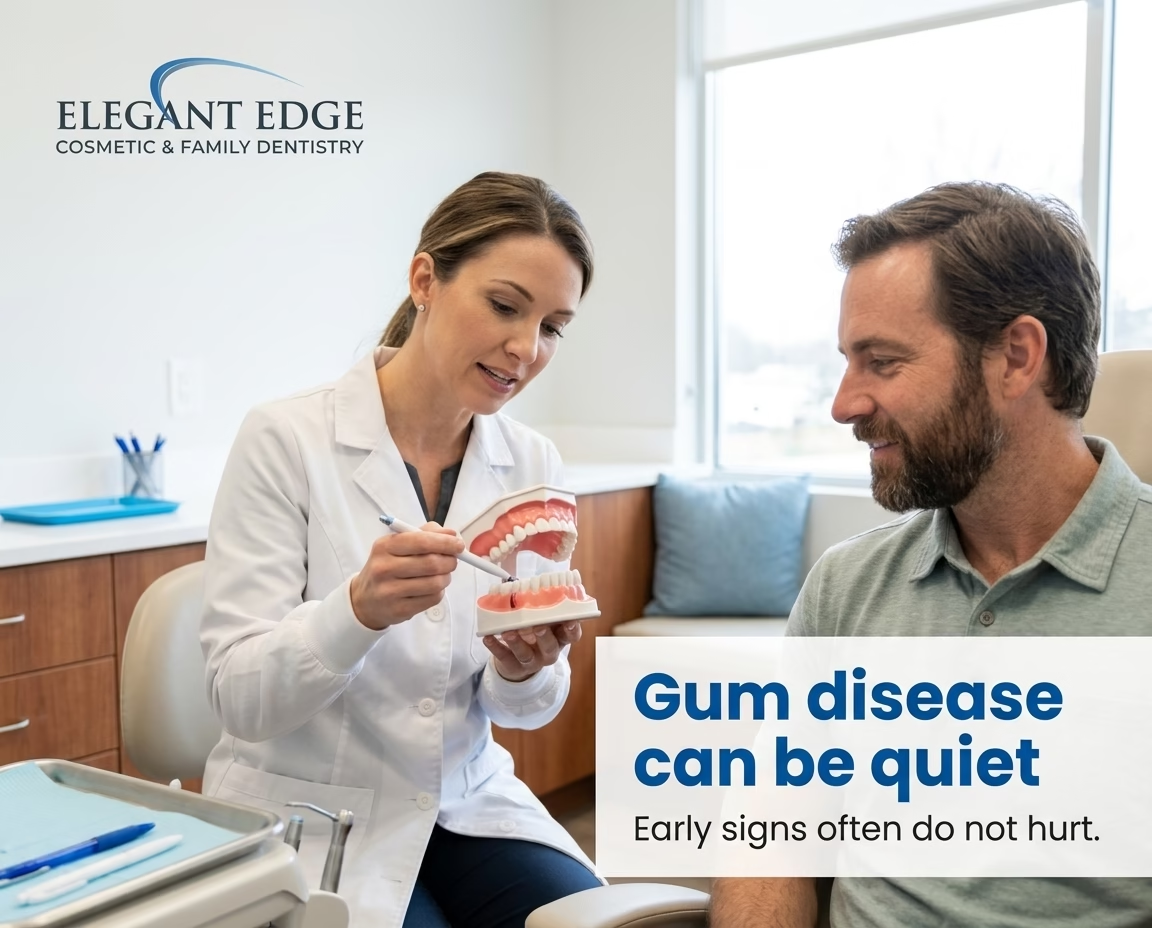
Gum disease warning signs include bleeding when you brush, swollen or red gums, gum recession, persistent bad breath, sensitivity, new gaps between teeth, looseness, pus, and changes in how your bite or denture fits. Most early signs are painless, which is why so many people miss them. Elegant Edge Dentistry in Rochester Hills, Michigan, treats gum disease at every stage, from preventive cleanings to laser-assisted periodontal therapy.
Key Takeaways
- Bleeding gums are not normal. Even occasional bleeding when brushing or flossing signals inflammation that needs a closer look.
- Gingivitis can be reversed with prompt care. Periodontitis is manageable, but the bone and tissue damage cannot be fully undone.
- Pain usually shows up late. By the time gum disease hurts, it has often progressed past the easiest treatment stage.
- Untreated gum disease is the leading cause of adult tooth loss, more common than cavities.
- Treatment is matched to the stage. Cleanings, scaling, root planing, and laser-assisted therapy are all options at Elegant Edge Dentistry. Call (248) 720-5387 to schedule.
What Gum Disease Actually is, and Why It’s Easy to Miss
Gum disease, known clinically as periodontal disease, is a bacterial infection of the gum tissue and the bone that supports your teeth. It builds up slowly. Plaque hardens at the gumline, bacteria settle in, and your body responds with inflammation.
There are two main stages.
- Gingivitis is the early phase. Gums are inflamed, but the bone and connective tissue underneath haven’t been damaged yet. This stage can usually be reversed with a professional cleaning and better home care.
- Periodontitis is the advanced phase. The infection has reached the bone. Some of that damage is permanent, although treatment can stop the disease from getting worse.
The CDC estimates that nearly half of adults aged 30 and older show some form of gum disease. So if you’re noticing changes, you’re far from alone.
Here’s the part most people don’t realize: in the early stage, gum disease usually doesn’t hurt. There’s no toothache to push you toward a dentist. That’s exactly why catching the warning signs matters so much.
10 Warning Signs of Gum Disease You Shouldn’t Brush Off
If you notice one of these on its own, take it seriously. If you see two or three together, schedule a general dentistry exam soon.
Sign 1: Your Gums Bleed When You Brush or Floss
Healthy gums don’t bleed. Not a little. Not even sometimes. The pink stain on your toothbrush is one of the most reliable early signals of gum disease, and it’s the one almost everyone ignores.
The bleeding comes from inflamed tissue reacting to plaque sitting at the gumline. It doesn’t mean you’re brushing too hard. It means there’s an active issue underneath.
What to do: don’t stop flossing. Flossing less makes the inflammation worse, not better. Book a cleaning instead.
Sign 2: Gums That Look Red, Puffy, or Swollen
Healthy gum tissue is calm, pale pink, and feels firm. When gums look bright red, shiny, or noticeably puffy, that’s bacterial inflammation talking.
A lot of patients chalk swelling up to brushing too vigorously. Almost always, the cause is the bacteria, not the bristles. Even without pain, swollen gums tell you the immune system is fighting something it shouldn’t have to.
Sign 3: Gums Pulling Away From Your Teeth
If your teeth suddenly look longer than they used to, your gums may be receding. Recession exposes the root surface of the tooth, which sits below the gumline normally and isn’t built to be on display.
The root surface has no enamel, so it’s much more sensitive. You may feel discomfort with cold water, hot drinks, or sweet foods.
Aggressive brushing can contribute to recession, but gum disease is the more common cause. Once gums recede, they don’t grow back on their own. A professional evaluation is the next step.
Sign 4: Persistent Bad Breath That Won’t Go Away
Bad breath after garlic pasta is one thing. Bad breath that returns hours after brushing, day after day, is something else entirely.
Bacteria living in infected gum pockets release sulfur compounds, and those compounds carry a distinct, stubborn odor. Many patients also notice a sour or metallic taste they can’t quite shake.
Mouthwash will mask it for a couple of hours. It won’t treat the infection causing it.
Sign 5: Teeth That Feel Sensitive to Hot, Cold, or Sweet
Sensitivity has more than one cause, but gum recession is a big one. When the root is exposed, hot coffee or ice water hits a surface that isn’t protected by enamel.
Patients often assume sensitivity means a cavity, then are surprised when the X-ray comes back clean. If there’s no decay, gum tissue is the next place to check.
A sensitive toothpaste can help with the symptom. It won’t fix the root cause if the underlying issue is gum disease.
Sign 6: Spaces or Gaps Appearing Between Your Teeth

Gum disease destroys the bone that holds teeth in their sockets. When that bone breaks down, teeth lose their anchor and start to drift.
You may see new gaps between teeth that used to sit tight, or notice that your bite has shifted. Sometimes a tooth that always met its neighbor cleanly suddenly doesn’t.
This is moderate-to-advanced periodontitis and needs treatment soon. Patients concerned about how their smile looks after the disease is under control may also want to ask about a smile makeover consultation later in the process.
Sign 7: Teeth That Feel Loose or Wobbly
A loose adult tooth is never normal. Not from age. Not from “always being like that.” Bone loss is the cause, and bone loss has progressed enough to be felt.
This is a sign of advanced periodontitis. Without prompt care, the tooth may need to be extracted. Even one slightly mobile tooth deserves an immediate evaluation.
If a tooth is already lost or unsalvageable, dental implants are one option to discuss with your dentist after the gum disease itself is treated and stable.
Sign 8: Pus or Discharge Between Your Gums and Teeth
Discharge along the gumline points to an active bacterial infection in a periodontal pocket. The body is sending immune cells to fight it, and the result is fluid you can sometimes taste before you see.
You might also feel pressure or tenderness in one specific spot.
This isn’t a wait-and-see situation. An active infection in the mouth needs care quickly. If you can’t get to your regular dentist soon, our emergency dentist page outlines the next steps for urgent dental concerns.
Sign 9: Deep Periodontal Pockets
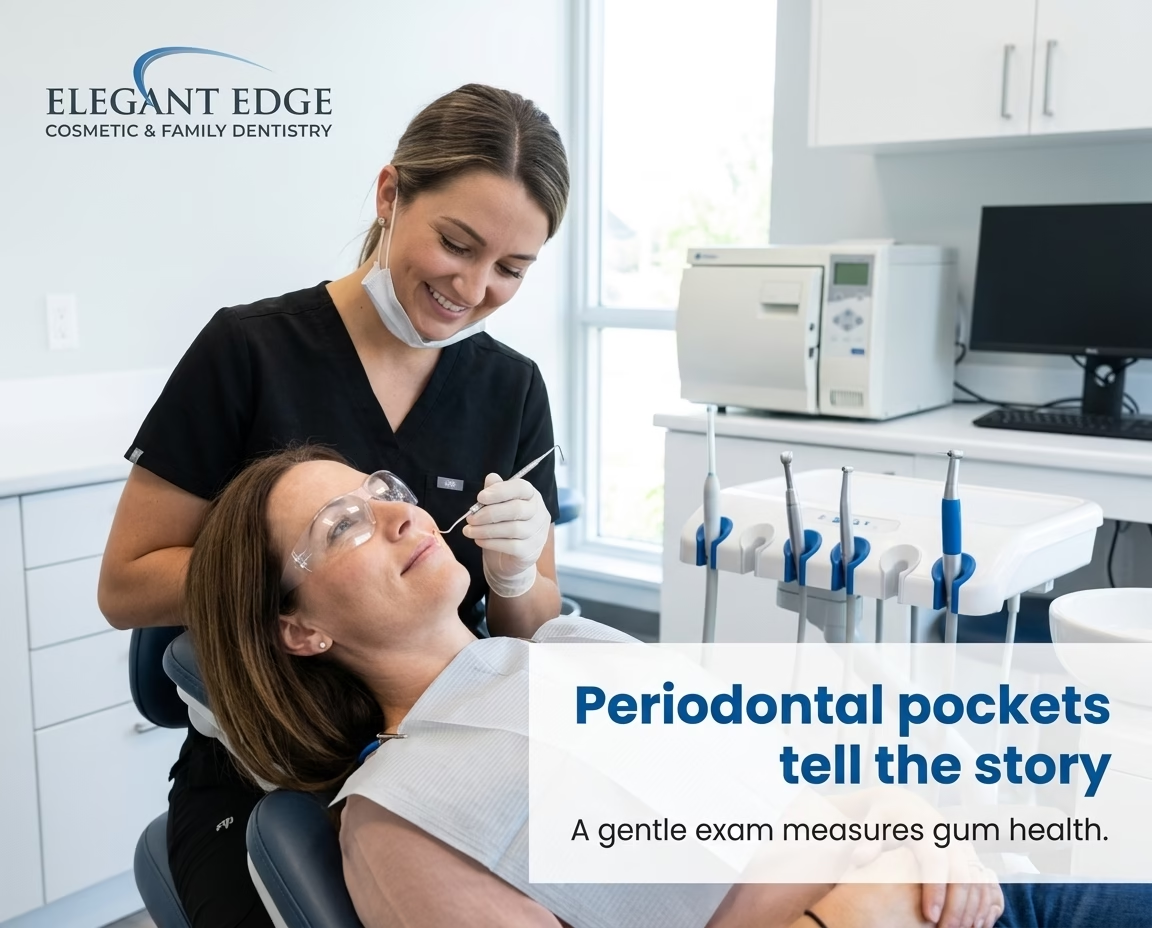
This is the sign you can’t see in the mirror. Healthy gums hug each tooth tightly, with a small natural pocket between the gum and the tooth root, usually one to three millimeters deep.
When gum disease takes hold, those pockets widen. Bacteria settle into the deeper space and continue feeding the infection. A dentist measures pocket depth with a small probe during a periodontal exam.
Pockets of four millimeters or more typically indicate active disease and call for treatment beyond a routine cleaning.
Sign 10: A Bite or Denture That Suddenly Feels Off
Long-term gum disease changes the shape of the jawbone. For people with natural teeth, this can show up as a bite that no longer feels right. Teeth seem to land differently, or one side feels higher than the other.
For denture wearers, the change tends to be subtler at first. Dentures that fit fine for years start to slip, rub, or pinch. The dentures haven’t changed. The jaw underneath them has.
It’s easy to chalk this up to “just getting older.” It’s worth checking either way.
Gingivitis or Periodontitis: Which Stage Are You Likely In?
Most patients want to know one thing: how serious is this?
Here’s a simple way to think about it.
If your only symptoms are bleeding, redness, or mild puffiness, you’re likely dealing with gingivitis. That’s the good news. It usually means a thorough cleaning, a careful home routine, and a follow-up visit can return your gums to health.
If you’re noticing recession, persistent bad breath, sensitivity, gaps, looseness, or pus, the disease has likely moved into periodontitis. That doesn’t mean it can’t be controlled. It does mean treatment will be more involved, and any bone or tissue already lost won’t grow back.
The dividing line matters because it changes the plan. The earlier you catch it, the less treatment you’ll need.
Why Gum Disease Affects More Than Just Your Mouth
The mouth is connected to the rest of the body. Bacteria from infected gum pockets can enter the bloodstream and contribute to inflammation elsewhere.
Research has linked untreated gum disease to higher rates of heart disease, more difficult diabetes control, and certain respiratory conditions. The relationship works both ways for diabetes: uncontrolled blood sugar makes gums harder to heal, and infected gums make blood sugar harder to manage.
For pregnant patients, severe periodontal infection has been associated with preterm birth and lower birth weight. Treating gum disease isn’t just about your smile. It’s about reducing one source of chronic inflammation in the body.
What Happens If You Ignore the Warning Signs?
Gum disease does not improve on its own. It progresses.
Gingivitis becomes periodontitis. Periodontitis breaks down bone. When enough bone is lost, teeth fail. Adult tooth loss from gum disease is more common than tooth loss from cavities.
Treatment also gets more demanding the longer the disease is left alone. An early cleaning is straightforward. Advanced cases may need scaling and root planing under local anesthetic, periodontal surgery, or restorative work like dental crowns to replace what’s been damaged. Catching it early keeps the work simpler, the appointments shorter, and the outcomes better.
How We Treat Gum Disease at Elegant Edge Dentistry in Rochester Hills
Treatment is matched to the stage of the disease. There is no single “gum disease appointment.” Your plan depends on what we find during your exam.
Professional Cleanings for Early-Stage Gingivitis
For patients in the gingivitis stage, a thorough professional cleaning followed by a stronger home routine is often enough. We’ll show you any spots you’re missing and adjust your technique if it helps.
Scaling and Root Planing for Advanced Cases
When pockets are deep or tartar has built up below the gumline, a deep cleaning called scaling and root planing comes in. We numb the area, clean the root surfaces, and smooth them so the gum tissue can reattach.
Laser-Assisted Periodontal Therapy
Our practice uses laser dentistry as part of the periodontal toolkit. Lasers can target diseased tissue with precision, often with less discomfort and quicker healing than traditional methods alone. Whether laser therapy is the right approach depends on your individual case.
Periodontal Maintenance
Once active disease is under control, patients with a history of periodontitis usually move to periodontal maintenance visits every three to four months. These visits keep bacteria from rebuilding in the deeper pockets and protect the work that’s already been done.
We accept new patients and can usually fit in prompt evaluations for urgent gum concerns.
What Affects the Cost of Gum Disease Treatment?
We don’t post fixed prices online because every month is different, and so is every insurance plan. A few things shape what your treatment will cost:
- Stage of disease – gingivitis care is far less involved than treatment for advanced periodontitis.
- Number of teeth and quadrants affected – scaling and root planing may be needed in only one area or across the whole mouth.
- Whether laser therapy is part of the plan, depending on the case, laser-assisted treatment may be added.
- Imaging or specialist referrals – periodontal X-rays or, in rare cases, referral to a periodontist.
- Insurance coverage – most dental plans cover periodontal exams and at least part of active treatment.
After your evaluation, we walk you through a clear treatment plan with cost details before any work is started.
What Happens at Your First Visit
Knowing what to expect takes the edge off. Here’s a typical flow.
- Brief intake. A team member reviews your medical history and any symptoms you’ve noticed.
- Periodontal evaluation. We measure pocket depths around each tooth, check for recession, and take any X-rays needed to assess bone levels.
- Diagnosis and explanation. Your dentist walks you through what we found, in plain language, and shows you any problem areas on screen.
- Personalized treatment plan. We outline the recommended next steps, the timeline, and what your insurance is likely to cover.
- Scheduling. If you’d like to move forward, we can book the next appointment before you leave.
You won’t be surprised by the treatment you didn’t agree to. Everything is discussed first.
Schedule Your Gum Disease Evaluation in Rochester Hills
If any of these warning signs sound familiar, the next step is a periodontal evaluation. The earlier we look, the less treatment you’re likely to need.
Call (248) 720-5387 or request an appointment online to schedule with Elegant Edge Dentistry. We’ll work with your insurance, walk you through your options, and build a treatment plan that fits your mouth and your goals.
Frequently Asked Questions About Gum Disease Warning Signs
Is It Normal for Gums to Bleed When Brushing?
No. Healthy gums don’t bleed during normal brushing or flossing. It’s a common assumption, but bleeding is almost always a sign of inflammation from plaque at the gumline. Occasional bleeding is the earliest red flag of gingivitis. The good news is that early-stage gum disease usually responds quickly to a professional cleaning and better home care.
Can Gum Disease Go Away on Its Own?
Gingivitis can improve with consistent flossing, careful brushing, and a dental cleaning, but it usually won’t fully resolve without professional care. Periodontitis cannot reverse itself. Once the bone and connective tissue are damaged, treatment can stop the disease from getting worse, but the lost structure does not regrow on its own.
What Does Gum Disease Look Like in the Early Stages?
In the gingivitis stage, gums often look slightly redder than usual, may appear shiny or puffy along the gumline, and tend to bleed when you brush or floss. Healthy gums are calm, pale pink, and stay quiet during brushing. A simple at-home check: lightly run dental floss between two teeth. If the gum bleeds, it’s worth a closer look.
How is Gum Disease Diagnosed?
A dentist or hygienist uses a small probe to measure how deep the pocket is between each tooth and the gum. Healthy pockets are one to three millimeters. Deeper pockets suggest active disease. We also take X-rays to check the bone level supporting your teeth and visually examine the tissue for redness, swelling, or recession. The exam is gentle and only takes a few minutes per quadrant.
Can Gum Disease Be Reversed?
Gingivitis, the early stage, is fully reversible with treatment. Periodontitis, the advanced stage, can be controlled and managed, but the bone loss and recession that have already happened cannot be fully undone. This is the most important reason to act on warning signs early.
How Often Should I Get a Periodontal Exam?
Most adults benefit from a periodontal screening at every routine checkup, typically twice a year. Patients with a history of periodontitis usually need exams and cleanings every three to four months to keep the disease from rebuilding. Your dentist will recommend a schedule based on your specific risk factors.
Will Dental Insurance Cover Gum Disease Treatment?
Most dental insurance plans cover periodontal exams, X-rays, and at least part of active treatments like scaling and root planing. Coverage varies plan to plan, especially for laser-assisted procedures and ongoing maintenance. Our team checks your benefits and gives you a written estimate before you commit to anything.
Can I Treat Gum Disease at Home?
You can support treatment at home with thorough brushing, daily flossing, and an antimicrobial rinse if your dentist recommends one. Once gum disease is established, especially below the gumline, only professional cleaning can remove the bacteria sitting in the pockets. Home care is essential maintenance, not a standalone fix.
